





We all need something to believe in. Maybe it’s God. Maybe it’s astrology, a lucky stone in your pocket, your weekly cold plunge, or simply the conviction that gathering in a room with other people might make life feel a little less difficult. We create rituals, search for meaning and find places to belong because, ultimately, life can be bloody confusing.
But what happens when the place that first gave you that meaning can no longer make space for who you are?
Brit Barron’s CHURCH and Michael R. Speciàle’s Bottoming for Jesus are two deeply personal, very funny and unexpectedly moving Fringe shows exploring faith, queerness and what happens when the religious communities that once gave you a sense of belonging no longer fit in quite the same way. Neither offers a simple story of repression followed by liberation. Instead, both sit within a much messier contradiction: what if becoming more yourself makes you feel more alive, but the world suddenly makes a little less sense? And how do you carry forward the parts that nourished you without carrying the parts that caused harm?
Life made more sense then, but I feel more alive now.
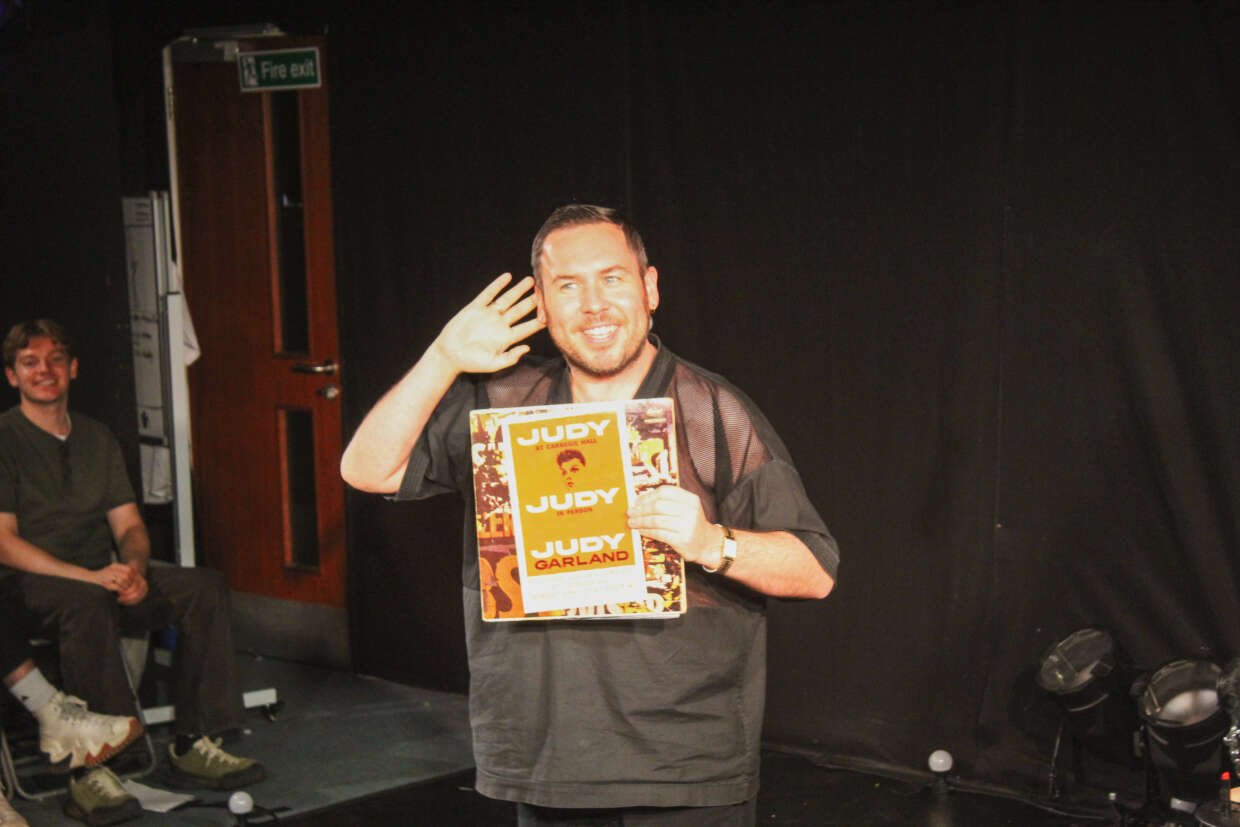
Bottoming for Jesus takes us back to Michael’s decision to join the Mormon Church at just 15 years old, while still a closeted gay teenager. Unlike many stories of queerness and religion, Michael wasn’t born into the faith he would later struggle with; he actively sought Mormonism out. No missionaries required.
On arrival, we’re handed a song sheet and what appears to be one of Michael’s teenage diary entries. As an avid journal writer myself, being handed somebody else’s diary felt slightly illegal – like finding your younger sister’s journal under her bed and knowing you absolutely shouldn’t peek. Before the nosier among us get much chance, however, Michael asks us to rip it up and throw the pieces into the air.
We never properly read those pages, but the diary follows us throughout the show as Michael returns to them in search of the teenager who wrote them. The more he tells us, the easier it becomes to understand what Mormonism offered a 15-year-old struggling to make sense of himself. He was beginning to understand that he might be gay without yet knowing what that meant. Mormonism offered an uncomplicated answer: it was wrong.
There is, of course, nothing comforting about being told that a fundamental part of yourself is sinful, but Michael is remarkably candid about the comfort he found in being given an answer at all. At a point in his life defined by uncertainty, the church offered friends, responsibility, community, rules and purpose. The church, he jokes, “filled his holes”.
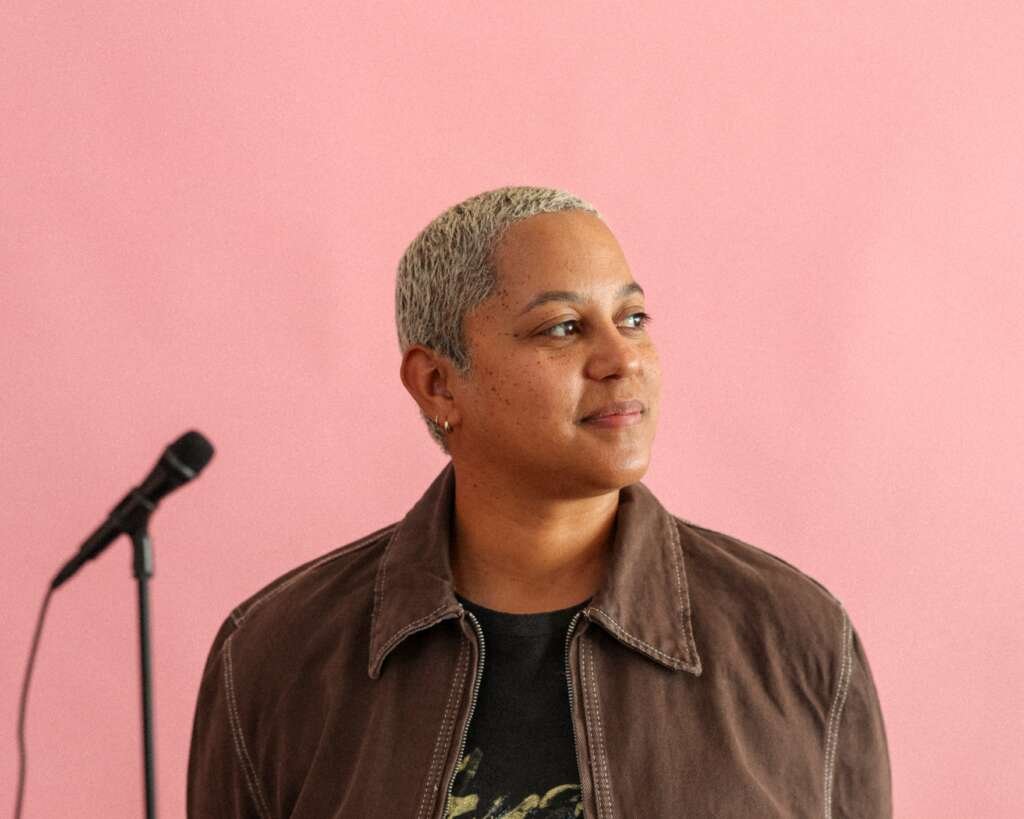
Brit Barron came to Christianity from a different direction. Raised within American evangelicalism, she describes the world of her youth through the brilliantly simple device of a “sin list”, an unofficial hierarchy where the more fun something was, the more points it seemed to earn you. Its contradictions become increasingly ridiculous: a woman in her Bible college community could lose her job for sleeping with her boyfriend, while a man who had previously been imprisoned for murder could be celebrated for his powerful story of repentance. Murder, apparently, could make for a cracking testimony. Consensual premarital sex? Straight up the sin list.
Brit, meanwhile, was smashing purity culture. While other young Christians struggled to resist sex with their boyfriends, she found it remarkably easy. “I didn’t know I was a lesbian,” she jokes. “I thought I was just better than everyone else.”
It gets one of the biggest laughs of the show, but also reveals an interesting contrast between their stories: Michael recognised his queerness and found a religion that told him what it meant; Brit was living so successfully within hers that it helped prevent her recognising her own.
By 26, she had followed the rules, built a career and become a pastor. She had, as she puts it, essentially “won Christianity”. Then her church hired a new creative director, Brit fell in love with her, and suddenly everything moved. She describes the experience as feeling like breathing for the first time. The thing making her feel most alive was now in direct conflict with almost everything that had previously made her life make sense.
More alive, less certain
Michael describes an almost eerily similar contradiction. Looking back at his time within Mormonism, he admits that he experienced more purpose there than at any other point in his life. Life made more sense then, he says, but he feels more alive now.
Both stories disrupt the neat liberation narrative we might expect. For both, queerness doesn’t simply conflict with faith; it disrupts an entire framework through which they had learned to understand themselves.
And then comes an admission from Brit that perhaps shouldn’t feel as surprising as it does: she misses church.
Christianity, she explains, was her “first language”. She describes a meal her mum used to make for her birthday and how, even years later, encountering similar flavours can immediately transport her back there. Church seems to work in much the same way. Brit wants those familiar flavours – music, ritual, community – without recreating the things that hurt her.
She also notices how people can recoil when she mentions that she sometimes still prays, even while happily embracing horoscopes, lucky stones or wellness rituals. We may change our relationship with religion, but our appetite for ritual, meaning and something to hold onto can be harder to shake.
Without asking what any of us believe, she has turned us into a congregation.
Yet both shows complicate the tempting idea that we can simply rummage through religion like an old wardrobe, keeping the bits that still fit and throwing away the rest. The things that nourished Brit and Michael weren’t always separate from the things that caused harm. Brit’s success within purity culture gave her validation precisely because the same system obscured her sexuality. Michael’s sense of purpose eventually led him to try to convert others, including a close friend who was a lesbian.
For Michael, that leaves a difficult question: “What do I do with my complicity?”
When he returned to his teenage diaries while making the show, Michael admits he found himself “looking for clues that absolve me”, as though somewhere in those pages might be evidence that he knew better or didn’t really believe what he was participating in.
But easy absolution isn’t where Bottoming for Jesus lands. Instead, Michael starts taking apart some of the religious language he inherited and asking whether it can be rebuilt. At one point a whiteboard appears and, wonderfully, our queer Fringe cabaret starts resembling Sunday school. He breaks atonement into “at-one-ment”, reframing it around becoming at one with each other, while repentance becomes less about shame and more about returning – specifically, returning to one another.
It struck me that Brit is, in her own way, attempting something similar. She searches for the familiar flavours of church without reproducing its pain. Michael takes words once tangled up with shame and asks whether they can mean something different. Neither simply discards what they inherited. They’re trying to work out what, if anything, can be rebuilt.
Building church again
Brit talks about the idea of “collective effervescence”, the almost electric feeling created when people gather and experience something together. It’s part of what she misses about the megachurch, and perhaps part of what she has found again through performance.
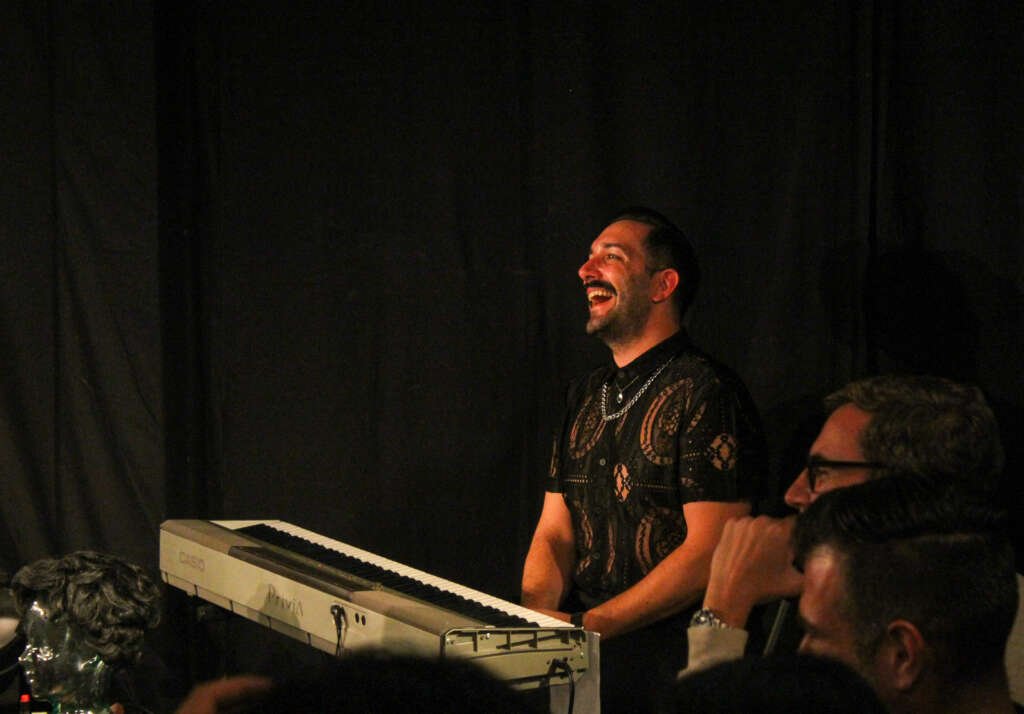
Throughout CHURCH, pianist and singer Hector accompanies Brit quietly from the left of the stage, an understated presence within the stories she is telling. At one point Brit recalls driving when Bridge Over Troubled Water began playing and being immediately transported back to church.
Then Hector begins to play.
Instead of simply hearing Brit describe what that feeling was like, the room gets to step inside it with her. For a few minutes, we’re no longer just an audience listening to somebody else’s memory. We’re experiencing something together.
By then, Brit has already quietly been changing the terms of the room around us. We arrived and received something resembling a church bulletin. We’ve listened to her story, laughed together and fallen quiet together. We’ve listened to music. We sing.
So when Brit eventually thanks us for joining her in church, I realise that somewhere along the way, without asking what any of us believe, she has turned us into a congregation.
Michael had done almost exactly the same thing. We entered Bottoming for Jesus carrying pieces of his past in our hands and tore them apart together. Over the following hour he overshares, sings, brings out his whiteboard and asks us to reconsider what words such as atonement and repentance might mean. Towards the end, we sing together.
There’s something beautiful in that progression: we begin by collectively tearing something apart and finish by collectively making something.
Walking out, I realised I had somehow attended church twice at the Edinburgh Fringe without setting foot inside one.
Both had the familiar ingredients – music, ritual, storytelling and collective experience – but the terms of belonging had changed. Michael turns sermon into queer cabaret; Brit reshapes the church service around a story of queer love. The people who once struggled to fit inside the congregation are now standing at the front of it.
Perhaps that’s what stayed with me most. Brit and Michael aren’t simply asking whether we can find community when our relationship with church changes, but whether we can take the things that made church powerful and rebuild them without rebuilding the boundaries that once decided who was allowed inside.
For an hour in two different rooms at the Edinburgh Fringe, it felt like they were trying.
And Brit’s question has followed me out of the theatre ever since:
What is your church?
Main image: Bottoming for Jesus. Credit: Taylor Ackermann




What a beautifully thought out analysis Hannah, really wonderful piece of writing 💓