
Self-care note: This wrap-up includes discussion of endometriosis, menopause, sexual abuse, anti-LGBTQIA+ policies and behaviours, gender based violence, and more. If you find this distressing or triggering, remember to take it at your own pace. You may prefer to read small sections, wait until you feel ready to read it all, or choose not to read it at all.
1. £2.3m trial to test new approach to endometriosis pain 🩺
A new UK-wide study will investigate whether a specialist pain management programme can improve quality of life for people with endometriosis who continue to experience chronic pelvic pain despite surgery or medication.
The £2.3 million, five-year trial is being led by the University of Aberdeen in partnership with NHS Grampian and funded by the National Institute for Health and Care Research. Participants will receive either standard care or standard care alongside a 12-week programme delivered remotely.
The programme combines CBT-informed psychotherapy, specialist physiotherapy, support around relationships, intimacy and communication, and a review of medication to help reduce side effects. Researchers will assess both its effectiveness and value for money, with findings potentially informing future NHS care and clinical guidelines.
Source: FemTech World
2. Every Scottish school to teach pupils about the dangers of misogyny 🏫
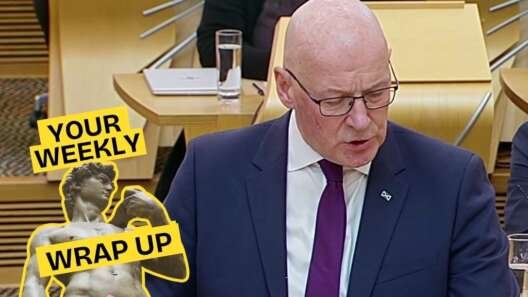
First Minister John Swinney has said education will play a “fundamental” role in tackling misogyny, pledging that schools across Scotland will educate boys about harmful attitudes and behaviours and their potential consequences.
The commitment forms part of the Scottish Government’s wider approach to preventing violence against women and girls. Its current programme includes targeted interventions for boys and young men, a multi-year public health campaign on misogyny, and work on online harms.
Swinney also confirmed that a pilot using GPS monitoring for some people on bail, including those suspected of domestic abuse, is due to begin, with the government considering wider rollout following the pilot.
Source: The National
3. Menopause Cafes linked to improved wellbeing and more open conversations ☕
Attending a Menopause Cafe can help individuals start conversations and seek support during this stage of life, a new report has found.
Conducted by the University of Glasgow’s Adam Smith Business School, the report says that half of women who attended a Menopause Cafe found it easier to talk to a partner or friend about their menopause, while almost one in three contacted a healthcare professional for the first time.
A volunteer-led, informal discussion group, the first Menopause Cafe started in Scotland in 2017. Since then, Menopause Cafes have helped people experiencing the menopause to destigmatise it and seek help.
Source: Medical Xpress
4. Pricey menopause supplements may offer little more than a basic multivitamin 💊
Speaking of menopause, some supplements marketed specifically to people going through menopause can cost hundreds of pounds a year without providing meaningful amounts of key nutrients, according to an analysis by consumer group Which?.
Nutritionists examined 26 popular menopause supplements and found that none contained what they considered the right combination and doses of nutrients to support their use specifically for menopause. Some cost more than £400 a year, while Which? found that a £22-a-year multivitamin provided higher amounts of several key nutrients.
Which? raised concerns that consumers may be paying a significant premium for menopause branding. Holland & Barrett said its own-brand menopause products contain “meaningful, evidence-based levels” of key nutrients and are not simply standard multivitamins with menopause branding. Love Mushrooms said its product was designed as a targeted blend of mushrooms, botanicals, vitamins and minerals rather than an all-in-one multivitamin.
Source: The Guardian
5. Far-right protests are disrupting services for survivors of violence 🚨
Women’s organisations across the UK say far-right and anti-immigration activity is disrupting their work and making some survivors of domestic and sexual violence more fearful of seeking support, according to an investigation by the Bureau of Investigative Journalism.
Organisations described cancelling events, moving services online and introducing additional security measures because of protests and threats. Sikh Women’s Aid said staff now carry panic alarms and undertake additional safety planning, while Rape and Sexual Abuse Service Highland said it had worried that a Reclaim the Night march in Inverness could be co-opted amid protests against asylum accommodation.
The investigation also found particular concerns for Black, minoritised and migrant survivors, with some services reporting that fear around immigration status, racism and far-right activity can discourage people from seeking help. Women’s organisations interviewed by the Bureau argued that violence against women and girls is being used to promote anti-immigration narratives while simultaneously making it harder for some survivors to access support.
Source: The Bureau of Investigative Journalism
6. Deepfake victims turn to civil action after police investigations stall ⚖️
Victims of AI-generated intimate deepfakes are pursuing legal action themselves after police investigations failed to identify or charge people who used X’s Grok chatbot to create abusive images, an investigation by the Bureau of Investigative Journalism has found.
Police in England and Wales told the Bureau that investigations had been hampered by anonymous accounts, jurisdictional issues and difficulties obtaining information from X. Presenter and campaigner Jess Davies, who reported a sexualised deepfake of herself to police, is now taking civil action against xAI, while Labour MP Jess Asato has also launched a legal claim over non-consensual AI-manipulated images. xAI has rejected some of the allegations made in Davies’s legal correspondence.
The investigation comes as new rules require online platforms to use technology to detect and prevent the spread of illegal intimate images, including explicit deepfakes, or risk substantial fines. Campaigners say stronger laws are an important step but warn that they need to be matched by effective enforcement and better training for police and prosecutors.
Source: The Bureau of Investigative Journalism
7. Menstrual tracking apps may promise more than the evidence supports 📱
A group of experts has warned that digital menstrual tracking may cause more harm than good and require greater scrutiny.
In a new analysis published in The BMJ, the experts said that menstrual tracking apps and so-called “cycle syncing”, which involves adjusting diet and exercise according to the different phases of the menstrual cycle, are not evidence-based, despite being widely promoted online and by tech companies.
The researchers also warned that the menstrual tracking apps may cause serious risks, including unwanted surveillance and threats to health data privacy.
Source: News-Medical.Net
8. Poland opens its first abortion pill locker 💊
Activists in Warsaw have opened Poland’s first abortion pill locker, allowing people to collect medication for a self-managed abortion anonymously from one of 22 compartments. The brightly painted “abortomat” has been installed opposite the Polish parliament, a deliberately symbolic location chosen by organisers campaigning for greater abortion access.
Poland has some of Europe’s most restrictive abortion laws: abortion is legally available when a pregnancy results from a criminal act or threatens the pregnant person’s life or health.
While people are not prosecuted for ending their own pregnancies, helping someone obtain an abortion outside the circumstances permitted by law can carry a prison sentence of up to three years.
The activists behind the locker say it is intended to make abortion care more accessible and people-centred. It forms part of an abortion support centre that opened opposite parliament last year, as attempts to liberalise Poland’s abortion laws have stalled.
Source: France 24
9. California bans child marriage as 32 US states still allow it 💍
California has become the 18th US state to ban child marriage, introducing a minimum marriage age of 18 with no exceptions. The new law, signed by Governor Gavin Newsom, will take effect on 1 January 2027.
Previously, California had no minimum marriage age, with children able to marry with parental consent and judicial approval. Campaign group Unchained At Last estimates that around 9,000 girls were married each year in the state and says the overwhelming majority of child marriages involved girls marrying adult men.
Survivors who campaigned for the change welcomed the legislation, with several describing being married as teenagers to significantly older men and subsequently experiencing abuse. Child marriage remains legal in 32 US states, although the rules and minimum ages vary considerably between them.
Source: BBC News
10. Menopause still overlooked in medical settings, study says 🩺
Menopause symptoms are rarely mentioned in medical records, a new study has found.
After examining the electronic medical records of almost 240,000 women in the US, researchers found that just 12 per cent included a mention of menopause, despite more than half of participants separately reporting that they were experiencing the transition.
The researchers suggested many reasons behind this gap, including the fact that the menopause is not a disease; that women may not report their symptoms; or that it may be considered obvious when a person is experiencing this stage of life.
However, the researchers believe that this represents a missed opportunity to expand medical research and improve personalised healthcare.
Source: The Conversation
11. Cornell students demand changes to university response to sexual violence 🎓
Students and staff at Cornell University have called for changes to how the university responds to sexual violence, as scrutiny grows over its handling of a reported sexual assault at a fraternity house in 2024.
The woman at the centre of the case, identified in court documents as Jane Doe, has filed a civil lawsuit alleging that she was drugged and raped by multiple men and that Cornell failed to adequately protect and support her. Cornell says it conducted an extensive investigation, which resulted in sanctions including expulsions and suspensions, and has agreed to an independent investigation. The fraternity chapter involved was closed in 2024 and remains barred from campus.
New York Governor Kathy Hochul has also appointed Attorney General Letitia James as special prosecutor after saying she had lost confidence in the local district attorney, whose office initially concluded there was insufficient evidence to bring criminal charges. Students and alumni are calling for greater transparency, changes to university policies and stronger measures to prevent and respond to sexual violence on campus.
Source: BBC News
12. Trump administration formally scraps Biden-era Title IX protections 🏳️🌈
The Trump administration has formally rescinded the Biden administration’s 2024 Title IX regulations, removing them from the federal rulebook and formally reinstating regulations introduced during Trump’s first term.
The Biden administration’s regulations changed how schools were required to respond to discrimination and harassment and explicitly extended protections against discrimination to sexual orientation and gender identity.
The Human Rights Campaign criticised the move, arguing that returning to the 2020 framework weakens protections for survivors of sexual assault and LGBTQIA+ students. The Trump administration says the change restores the correct interpretation of Title IX.
Source: Human Rights Campaign
13. Protests around the world mark International Safe Abortion Day 🌍
Demonstrators in countries including Ecuador, Malta and Peru took to the streets around International Safe Abortion Day on 28 September, calling for improved access to safe and legal abortion and for people to be able to choose whether and when to become parents.
The World Health Organization estimates that around 73 million induced abortions take place globally each year, and says barriers to quality abortion care can affect a range of human rights. Historical global estimates for 2010–2014 suggested around 45 per cent of abortions were unsafe.
In Northern Ireland, plans to illuminate Belfast City Hall to mark the day were cancelled after the Democratic Unionist Party challenged the decision through a council procedure. The move followed opposition from several Christian and anti-abortion organisations, while reproductive rights groups criticised the cancellation and reiterated calls for abortion to be treated as an essential part of healthcare.
Source: BBC Global Women