

In OnlyFans for Therapy, Verona Verbakel uses video to revisit places and memories connected to her own trauma. Rather than offering a neat story of recovery, the show moves through fragments: returning to places she has avoided for decades, watching recordings of herself confronting them, and considering what it means to live with trauma long after the events themselves.
We spoke to Verbakel about why she felt compelled to go back, the line between performer and person, the strange intimacy of sharing private material with strangers, and why she resists the idea that trauma needs a happy ending.
If you had to describe OnlyFans for Therapy in three words, without using “trauma” or “therapy”, what would they be?
Disturbing, vulnerable and funny.
Where did the idea for the show actually begin? There are a lot of biographical elements to it, but where did the show itself come from?
I mean, I don’t have a great answer, but the real answer is that I was watching the documentary Grey Gardens. It’s about a disturbing mother-daughter relationship in a dilapidated house, and I don’t know, it just reminded me of my life. I thought, I should do something with that.
I think I use the show as an excuse to go on my own personal journey, I guess, and to explore all the things that I haven’t looked in the eyes yet.
So I felt this great necessity to go to places that trigger me, that I hadn’t visited for more than 25 years.
You visit quite a few of those places in the show, including the courthouse and the house where you lived when you were younger. What were you looking for when you went back?
I think that’s the thing: I wasn’t looking for anything.
It was really just the confrontation of literally not seeing these places for 25 years and seeing what would happen. It wasn’t a thing of, “Oh, I’m going to do this or that.” It was more, let’s see what’s going to happen.
I had no idea.
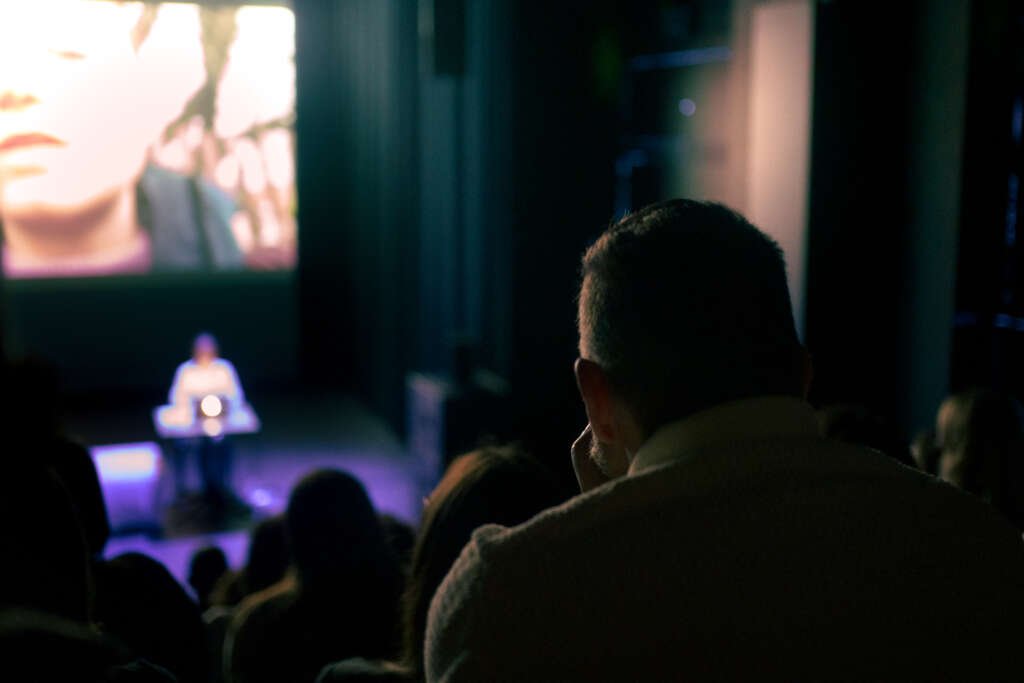
Did those places feel the way you remembered them?
No. It was weird, because you remember them in a way that is from the past, and suddenly you see them with the eyes that you have now. So it changes how you remember them.
There is this confrontation because, in your mind, I don’t know, I always thought they would remain the same. Then you see something and suddenly there are solar panels, or there are great reviews about an institution that you used to hate.
I think that’s really the beauty of it: you go to these places and you see that they’re different now. And that’s what I love. I love that it can be different now, or that in a couple of years they might not even exist anymore.
I think that’s a good thing.
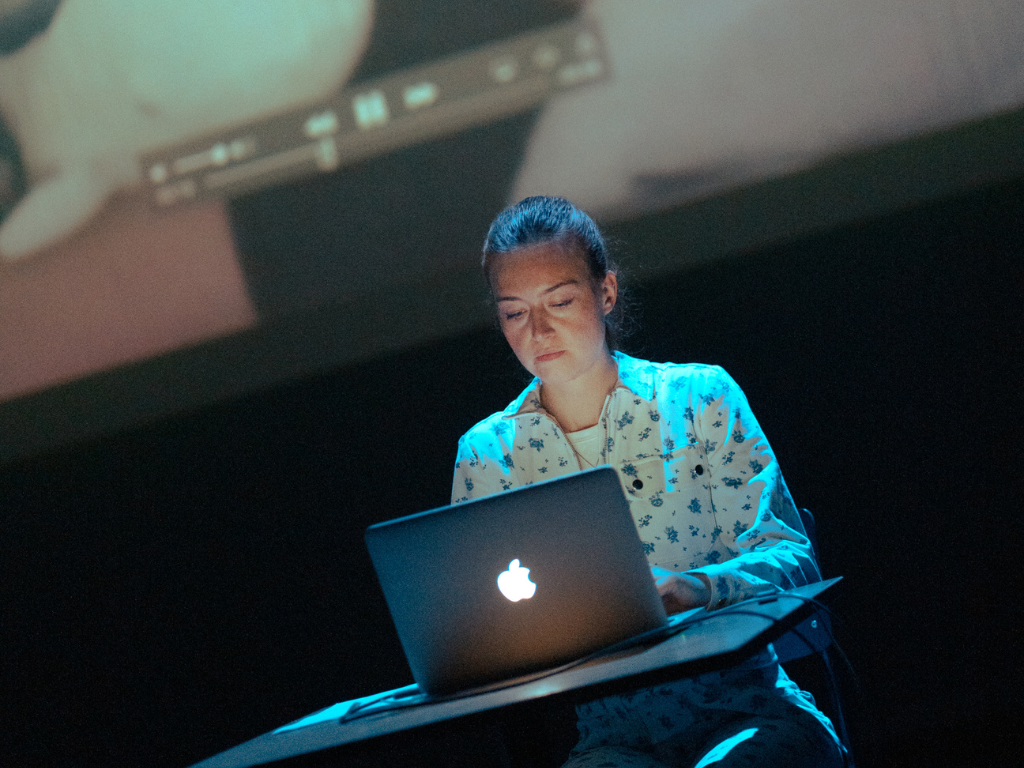
The show is largely a sequence of videos that you recorded yourself, which also means you have to watch yourself throughout the performance. When you see the Verona in those videos now, how do you relate to her?
I don’t really think I relate to myself in those videos. It’s more that I relate to the feeling that I had in that moment.
Obviously, I don’t look at myself while I’m taping myself, because that wouldn’t be very good for taping it. So I’m really aligned with the feeling that I had at that moment, but I’m not aligned with how I look.
I can look at it and think, “Oh, I look a bit tired there,” but that’s just the shell. (I guess that’s also what I want from the audience, that they judge me beyond the theme of the show, even if that means judging the way I look, because that means they’re seeing a multi-dimensional person, not just someone who went through trauma.)
What I’m feeling, I think I will always feel in the same way that I did the first time I taped it.
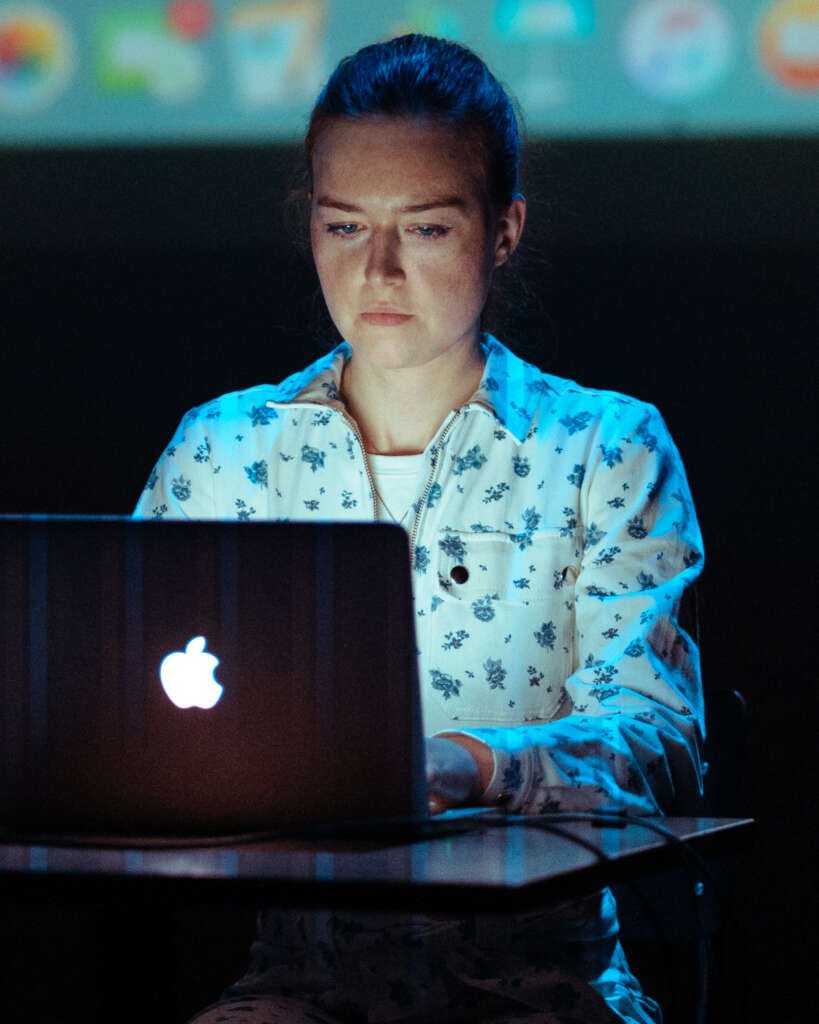
When you perform the show, where does Verona the performer begin and Verona the person end?
It’s a difficult line to tread, I guess.
What was very important to me was that I was confident in the way my therapy was going, so I knew that if I was uncomfortable, or I didn’t want to be somewhere anymore, I could just leave. And that was something new to me.
I think it goes hand in hand with having this excuse that, “Oh, I’m just going to go there as a performer and I’m going to watch what happens.” But actually, I’m not performing there. I’m just myself.
Or at least that’s what I think I did. Maybe there’s some professional deformation in my mind and I don’t even know that anymore.
But I think you have to go there with an open heart and an open mind, from the perspective of yourself as a person, and be very vulnerable and authentic. Because otherwise, why am I there?
Because the show is so personal, and you’re sharing very intimate parts of your life onstage, has being so open in performance changed how protective you are of your privacy offstage?
I think yes, but I’ve always had that. I’m very open onstage. I require that of myself — I need this brutal honesty onstage — and then in my private life I’m very hesitant, even about talking about the trauma that I’ve gone through. I don’t feel the need to talk about it so openly in my private life.
So it has helped me process it in a way where I don’t have to process it very publicly, if that makes sense.
I can talk about it with strangers and, in the best ways, I can process it, but I don’t have to do it in a way that feels voyeuristic to me. Sometimes that is something the outside world can require of you from the moment they know you have trauma. They become interested for all the wrong reasons.
The audience has helped me process it and look at it in a different light without feeling that the audience wants something voyeuristic from me or that I want something from the audience. I’m just sharing and depending on people’s life experience, they can take with them what they want (from the show).
What do you hope audiences leave the show thinking or talking about?
Karolien De Bleser (Ontroerend Goed), the co-director, and I really wanted to make a show about two things.
First, we wanted to show that trauma isn’t linear. We didn’t want the story to be, “Oh, and then this happened, and then this happened,” going logically from A to B, because that’s not how trauma works.
It’s very fragmented, and you make the story — or you make my story — based on your own life experiences.
The second thing is that sometimes the world wants you to create this Disney version of your story: this traumatic thing happened to me, then I went to therapy, but now I’m thriving and I’m great and I’m doing all these amazing things with my life because I’ve overcome this hurdle.
At least in my experience, that is not how it goes. What I hate is this idea that trauma should be productive or sellable. No. It’s going to be muddy, and it’s going to be disgusting, and it’s going to suck.
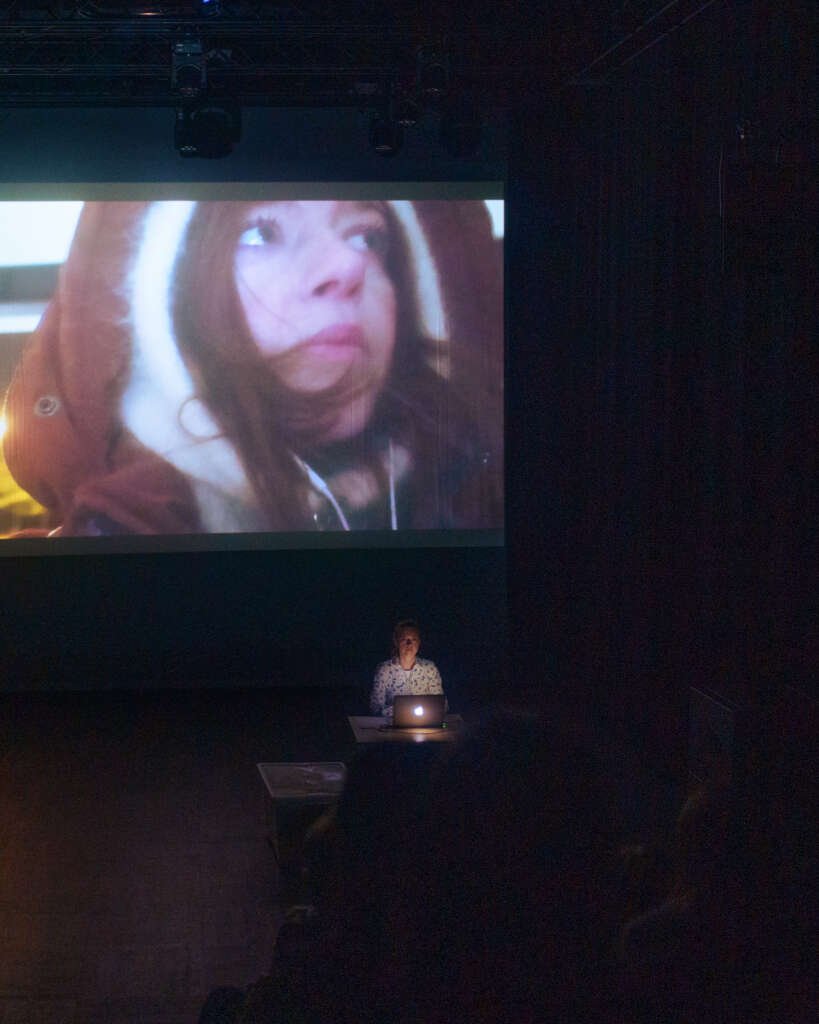
I’ve even had that with selling the show. Certain people from other venues have said, “Yeah, we love the show, but it doesn’t really have a happy ending, so we’re a bit concerned about ticket sales.”
And I was like, okay, you’re actually confirming why I’m doing this show. It shouldn’t have to be sellable. It’s so absurd. It’s not a Disney movie.
And I don’t think that’s a pessimistic statement. I think I’ll be dealing with this for the rest of my life, and that doesn’t mean I’m going to be unhappy for the rest of my life, or unhappy all the time. Sometimes trauma is an all-consuming part of your life, but it doesn’t have to be for the entirety of your life.
But it does mean that it will require an extensive amount of energy throughout my life. That’s why I made the calculation of how much therapy for a lifetime will cost me, because I think that’s what I’ll have to do in order to live a great life.
But it’s going to cost you something.
Can you remind us how much that calculation came to?
I don’t know the exact number — people should come and watch the show for the exact number — but I think it’s around £200,000.
It’s a lot. It’s a small house!
And finally, for anyone who’s come to see the show: what’s the best therapy snack?
The best therapy snack is the snack that you want to eat in that moment.
It can be anything.
All images by Kaat Pype