

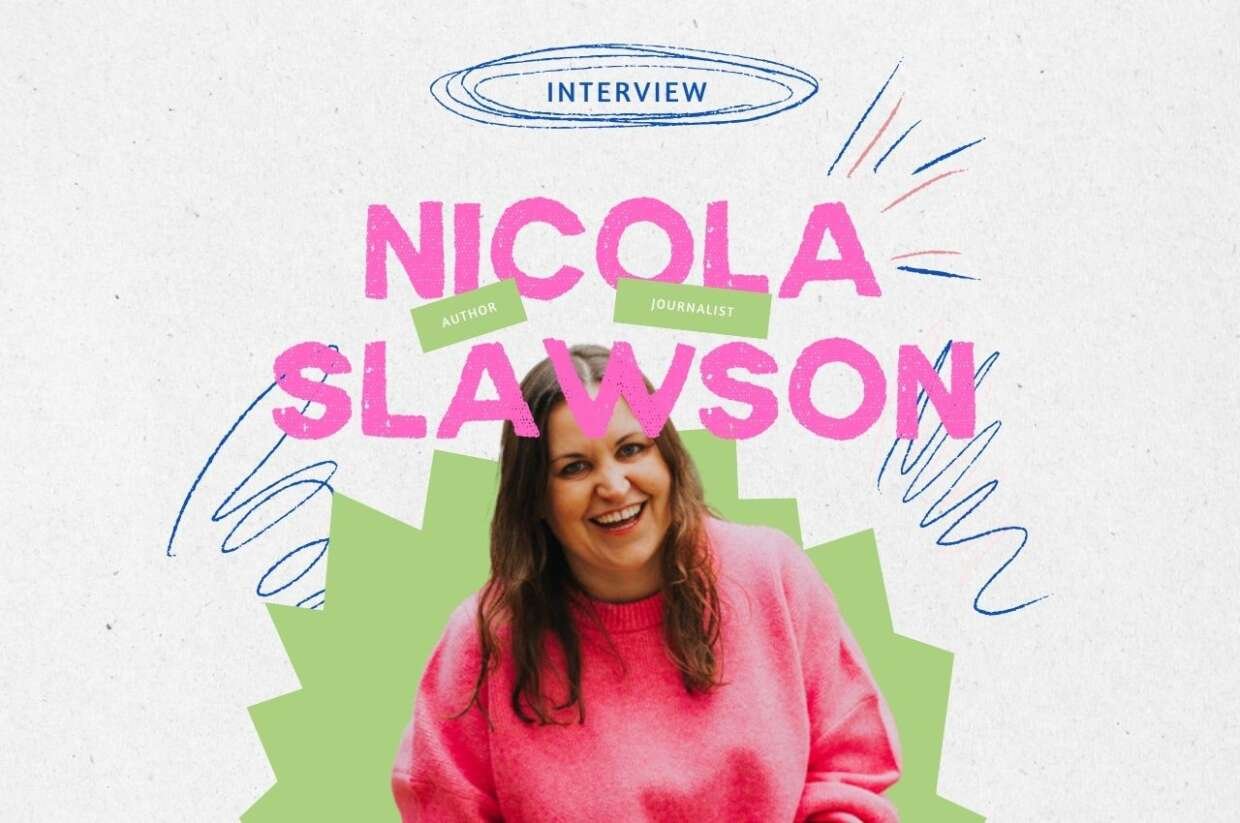
One thing that stands out in your writing is how it focuses on single life itself, rather than dating. What made you want to take that approach?
When I launched the newsletter, I was getting really frustrated with how little there was out there for people who were single but not actively dating. All of the pieces about being single assumed you were desperately trying not to be single.
Dating just dominated the conversation. But when I spoke to my single friends, dating wasn’t their main concern. They were worried about rent increases, how to afford a master’s degree, looking after ageing parents alone, or what happens if they broke their leg and lived in a flat with stairs. They weren’t necessarily talking about dating. Sometimes they were, but a lot of the time they weren’t.
I made the decision to decentralise dating from the conversation. I’m really glad I did, because I think it makes it more of a unique space.
There are people who are single by choice and don’t want a relationship – while there are others who see themselves in a relationship in the future but want to enjoy their time being single now. Their voices get lost if we only focus on dating.
You have been writing about singlehood for a long time. Has your perspective changed since working on your newsletter and book?
Yes, definitely. When I first started, I still felt quite a lot of shame. But after so many interviews, guest pieces, and reading, I realised it was external forces that make me feel ashamed about being single. When you really think about it, you realise it’s not actually a problem. You can still live a really good, full life.
At first, I never used to speak about wanting a baby, for example. I’d developed this cool girl persona, pretending I didn’t care about that kind of thing.
Eventually I wrote about it in the newsletter, and then it led to a Guardian opinion piece. That shift was a big one.
There’s a lot of shame. Single women don’t want to admit they want children. If you’re in a couple, you can talk about wanting children and struggling with fertility and get sympathy. But if you’re single and want to be a parent, you get blame, or told to just “do something about it.”
I also got caught up in the single positivity movement. It’s not like I don’t believe in single positivity, I do. It’s great for challenging the idea that single means lonely or miserable. But I’ve shifted toward single neutrality. You can love being single, you can hate it, and you can feel both at different times. That’s absolutely fine.
What would you tell your younger self now?
I wish I could tell her she’s doing the right thing and not to worry. She’ll realise the single most important relationship in her life is the one she’s having with herself.
I’d tell myself: stop comparing, stay in your lane, focus on what you’re doing. All the stuff about milestones, it’s total bullshit. It’s just designed to make us feel bad. Even people who are on the “correct path” feel pressure to do things at the right time or in the right order.
When you get older, you realise people change course. Friends might end up getting divorced or becoming widowed. They might sell their house, buy a van and go travelling or change careers and go back to university. In your 30s, especially mid-30s, it can feel like you should have done all the things – get married, buy a house, have a baby – but then you realise it’s pointless having a timeline for these milestones – and you also may never do any of them and that’s OK too.
Now that I’m older, I see so many people doing things differently.
Is there a myth about being single that you most want to debunk?
That you can’t be happy and be single. People still find that really hard to believe, especially people in long-term relationships. They think you must be kidding yourself. They seem to ignore that they’re not happy 100% of the time either.
That’s partly why the single positivity movement exists. But the downside of focusing only on positivity is that it can exclude people who don’t feel great about being single all the time.
Has being single changed your relationships with friends, family, or even work?
Yes but more than just being single, it’s been talking about being single publicly. A lot of my friends are now also kind of experts in single issues.
It’s made my relationships stronger, and people understand me better. And because I’m not in a relationship, I’ve had more time to nurture friendships, make new friends, make new memories.
Family-wise, I moved back in with my parents during the pandemic. That was actually a gift; you rarely get to spend that much time with your parents as an adult.
Work-wise, it’s a double-edged sword. Sometimes it’s harder to focus because I pay all my bills myself. Creative projects like fiction writing can feel hard to justify. But on the other hand, relationships take time and energy too, so there are swings and roundabouts.
Were there any cultural communities or movements that surprised or inspired you while researching the book?
The polyamory community really inspired me. I did include a chapter about dating, almost against my will, but I felt it needed to be there.
I wanted to show alternative approaches because so many people come to me saying they hate dating apps. I wanted to reflect that, and explore different paths.
Several people I interviewed happened to be polyamorous. One woman I spoke to lives with her son and has a boyfriend who’s married, all ethical and agreed upon. She loves it because she gets great dates, great sex, no domesticity. She sleeps like a starfish, focuses on her work and her child. That’s her happy place.
Another woman was exploring her sexuality through sex parties. She felt safe and empowered in those spaces, in a way she might not have in traditional relationships.
That community seemed really open to single people too.
What about different cultural attitudes to singleness around the world?
I interviewed an academic in India who grew up in a community where religious leaders had to be single, so they could serve the community. It was all about collective life, not couples being insular.
Eventually she chose not to marry, and now she runs the world’s first single studies course. I found that really interesting.
Your work explores intimacy in so many forms, from solo joy to chosen families and beyond. One example of that is your decision to pursue platonic co-parenting, which you wrote about in the Guardian. Is that something you’ve seen more people exploring?
Yes, I’m now in a community of people doing the same. When I published that piece, a handful of people reached out to say they were doing the same. Thomas, my co-parent, even had a phone chat with someone considering it.
Some do it with a gay couple and a single woman. Others, like us, are two single people. Some didn’t even know each other before they started planning a child.
There’s even an organisation that holds talks and meetups to connect potential platonic co-parents.
In a way, everything you’ve explored touches on different forms of intimacy — sexual, platonic, emotional. How can we help people better understand intimacy?
Oof, that’s such a good question. I wish I’d prepared something!
I think it starts with knowing yourself, getting in touch with who you really are, and accepting that person. I love what Sadia Azmat writes in Sex Bomb — about peeling herself like an onion to figure out what she really wanted.
We’re raised to be people-pleasers. Especially women. We’re not taught to have wants or needs. I write in the book about being called “needy.” We don’t use that word for men. But it’s okay to have needs!
And as a final question: out of all the conversations and interviews you’ve had over the years, is there one that really changed you or stuck with you?
Yes. On the motherhood side, it was my conversation with Jody Day. She founded Gateway Women, which supports women who’ve realised they’ll never be mums.
I had avoided speaking to her for a long time. She had even invited me to a panel during the pandemic and I said no because I couldn’t face the idea that I might one day be part of her community.
Eventually I did agree, and the panel was about Christmas, about how it’s framed as only for couples or families. I joined from my flat with a huge Christmas tree behind me, saying, “I deserve this too!”
When I interviewed her for the book, she spoke beautifully about the moment she realised she’d never be a mum, the grief that came after, and then the joyful life she built afterward. What struck me was that she’d tried everything. I was floundering at the time, unsure what to do.
That conversation made me think: I don’t want to have regrets. I want to try. So if it doesn’t work out, at least I know I gave it everything.
In terms of singlehood, it was my chat with Bella DePaulo. She researches people who are “single at heart,” people who have chosen that path as their truly the right path.
One of the book chapters, “One is a Whole Number,” is named after something she said to me.
Her work made me really think: is that me? Am I single at heart? Is this my best life? And I realised, I don’t think I am. I would like a relationship in future.
So that conversation helped me get clearer about what I want.
There were so many more. I interviewed way more people than ended up in the book, but they all informed it. Those were my favourite parts of writing it, the conversations.
You can find out more about Nicola and her work on Instagram.
Help us make room for pleasure
Pillow Talk Scotland is powered by our community, not by advertisers or big corporations. Your support helps us keep our work independent, run community events, and create inclusive, pleasure-centred resources for people across Scotland and beyond.
If you’ve found this piece useful, please consider supporting our work.
→ Chip in once – whatever you can
→ Become a monthly supporter – help us plan ahead and make more room for pleasure, together.