
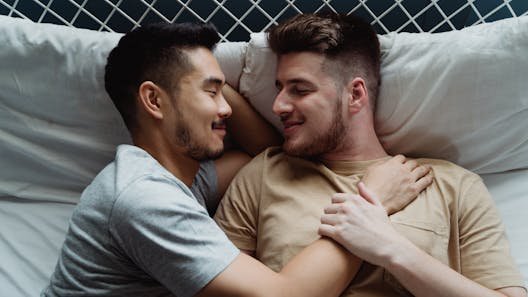

Society has a propensity to infantilise autistic people, treating us as lesser in all ways: less capable, less adult, innately less sexual. This is an issue shared across a broad spectrum of disabled people, but the communication differences autistics experience can often lead people to believe we are incapable of consensual, fulfilling sex lives. Sex often affords autistics a rare opportunity to shed social obligation and begin the complex process of unmasking.
Unmasking is the process by which autistic people shed the coping mechanisms we wear like a ‘mask’ in social situations, often without even realising we are doing it. Suppressing stims, over-scripting every conversation, and tolerating sensory overwhelm for far longer than is healthy are just a few parts of masking. It could be summarised as making ourselves more palatable for neurotypical-dominated social situations.
Autistic people often experience the same drives and desires as allistic (i.e. non-autistic) people, and we navigate them in just as diverse a manner. It’s important to note that autistic experiences vary widely, as with any group of people. So if you read this as an autistic person and find it doesn’t apply to you, that doesn’t make your lived experiences less valid, and it certainly doesn’t call your autism into question. Likewise, if you’re allistic, you’re still better off checking in with the individual person you’re interested in rather than assuming you know it all through reading this piece.
Just tell me what it is that you want. I’m not a mind reader.
Autistic people have sex
Let’s not beat around the bush — autistic people have and enjoy sex. What that looks like might differ between individuals, but desire itself is hardly unusual.
Sensory processing differences are a key aspect of autistic life. Some autistic people are hypersensitive to sensory input, while others are hyposensitive and seek stronger sensations. Many experience some degree of both sides of this coin, seeking out some inputs while avoiding others. These sensory issues impact every aspect of our lives, including our sex lives.
Sex encompasses all the senses, and understanding how that intersects with a specific autistic person’s needs and limits is key to having enjoyable, consensual sex with an autistic person.
Sol, a 19-year-old straight woman, says that her “unilateral thinking” — the propensity for autistic people to be rigid, black and white thinkers — can make dating a challenge for her. “I think I’m being really open, but my date perceives me as closed off, and I don’t know how to change that. Or they’ll say I’m giving off mixed signals when I don’t think I’ve been ambiguous at all.” She says her rigid thought patterns make it hard to adapt to feedback like that. “Some people also don’t want to deal with an autistic person. I’ve been on three or four dates with a guy, built up a great rapport, and then had him ghost me when I’ve been comfortable enough to tell him [I’m autistic].”
Unilateral thinking can also impact how we understand ourselves and the social scripts we’re given about attraction and identity. Spencer, a 21-year-old lesbian, says that her autism made her think she was straight, or at least bisexual. “I thought I was like all the straight women who talked so negatively about men. Like, yeah I have those feelings too. I must be like you.”
Dating apps are a mixed bag
Sol also highlights the difficulties of dating app life for autistic people. “There’s an expectation that a first date will be rehashing a lot of what’s on your profiles,” she says. “But I’ve read his profile, I know this stuff already, why are we repeating it, why are you asking me the same question again? It’s really tiring.”
“There’s also a lot of last-minute changes to plans because it starts off so casual and people fail to understand that I don’t really feel comfortable with that — aside from the fact that I’m really busy, I need a few days to build up to plans.”
However, the apps aren’t all bad. “In the land of Grindr, rudeness doesn’t exist anymore. You can ask people what they want and tell people what you want,” says Bethnal, a 21-year-old whose gender and sexuality are somewhat nebulous and “only really relevant to people I’m sleeping with”. He continues, “It’s the joy of the bio where you tell, explicitly, before anybody even exchanges any messages, this is what I’m looking for, this is what I’m not looking for.”
These kinds of explicit boundaries and expectations can remove the burden of masking from autistic people. Knowing the parameters of an encounter can free up parts of our mind that are hypervigilant to invisible social cues.
Kink, boundaries, and knowing what to expect
Bethnal also discussed how kink and some autistic people’s need for explicit boundaries go hand in hand. “There’s a whole preamble where we say what we want and don’t want, which makes things easier. There are set rules throughout the whole thing. And there are clear parameters of when it stops and ends.
“I do think it relies on a level of trust in both directions. I find it very easy to submit to my partner in a way that I wouldn’t with most other people because he knows much better than anyone else who I am and what I like and don’t like. It’s one thing to talk about limits in sex, but it’s another if background noise happens and I’m not going to be able to explain what’s going on. And I just trust him to know. It’s like a completely different kind of interpersonal understanding. That context is there in a way that it isn’t for other people.”
We usually silo sex off from the rest of our lives, so it’s a really powerful arena to practice unmasking.
Bethnal’s experience chimes with my own — the bedroom feels like one space where my partner and I are so caught up in the moment-to-moment experiences that I can really let my guard down. Sex is all about pleasure and because we’ve had those conversations about boundaries and expectations, I can relax into it and stop worrying so much about what I’m ‘supposed’ to do.
Transmasc polyamorous Kai, 42 years old, says that autism and ADHD impact his sex life in an intertwined way. Autism in particular can make it difficult for people to get on with what he describes as the “neurotypical-coded, arbitrary rules” of monogamy. “I think it’s a huge part of why I’m kinky too. You need to have systems in place, which I think appeals to my autism. You negotiate in advance, and then everyone knows what’s going on and what could happen. We both have agreed on a set of things that could happen and a set of things that will never happen at this point.”

Sensory needs can pose a challenge
“I’m very smell sensitive,” says Kai. “I thought for years that I was a bad bisexual because I loved [giving] fellatio but hated [giving] cunnilingus. It took me so long to figure out that it was a sensory issue because your nose is all up in there, and it’s too much. I’m very smell-sensitive.”
Sensory sensitivities play a role in Bethnal’s sex life too. “Importantly for the gay male sexual economy, I can’t handle poppers, “ he says. “The sensation of something going down from my nose to the back of my throat…” he shudders. “I really dislike pleather and neoprene; it’s so sticky. Sweat can be slippery and fun, but clammy sticky is awful.”
Personally, I find that experiencing sensations (even positive, pleasurable ones) is very tiring, so despite enjoying sex very much, there’s a long recovery period to reset my senses. It’s crucial that my partner can accept that I’ll never be up for it every single day.
Unmasking is an important part of autistic sex lives. “For a long time I think the desperation to find a label for my sexuality/gender was part of my decades of masking,” says 35-year-old transmasc Han. “Because so much of my life is spent regulating my sensory overload, I really need to trust someone before I let them have any semblance of control over that.”
“We usually silo sex off from the rest of our lives, so it’s a really powerful arena to practice unmasking,” adds Bethnal.
What non-autistic partners need to understand
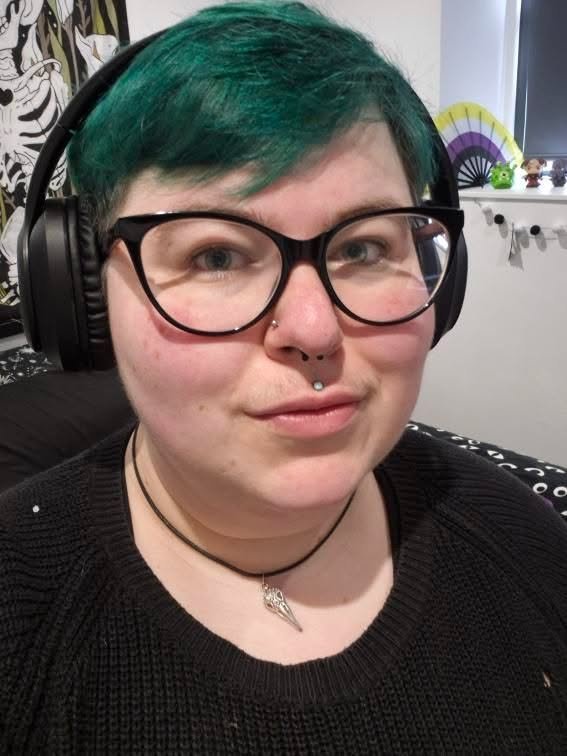
“I’ve got a few words for the non-autistics,” he continues, “if I can dive through the phone and shake them: just tell me what you want. Literally, just tell me what it is that you want. I’m not a mind reader. Tell me what you want, and then we’ll all be happier. I will make sure to tell you what I want. If you’re in any doubt, you can ask.”
Han also shared some words of wisdom: “For me personally, I think they would need to remember to have patience as lots of things can add up and have me in sensory meltdown very quickly, especially in a vulnerable situation like sex, and not to take it personally if it happens with them.”
For me and many of the people I spoke to for this article, sex is one of the few spaces where unmasking feels possible. It requires honesty and trust in a way that can feel difficult but is often liberating when achieved. Sexual encounters provide what is often a private, tender space to drop the pretence and redirect our energy to something more pleasurable.
Autistic people are missing from broader conversations about sex, too often spoken about rather than listened to. Having space to speak for ourselves solidifies the fact that autistic sex lives aren’t an exception to human experience — they’re part of it.
This article is part of Pillow Talk Scotland’s Bold Type Fellowship, a programme supporting emerging writers and journalists to publish bold, well-researched stories about sex and relationships. The Bold Type offers mentoring, workshops, and paid writing opportunities, with a focus on supporting those who have faced barriers to entering the media.
The fellowship’s first round was delivered thanks to funding from Women’s Fund for Scotland.
Want to keep up with our latest stories? Subscribe to our free newsletter for new writing, events, and resources.