
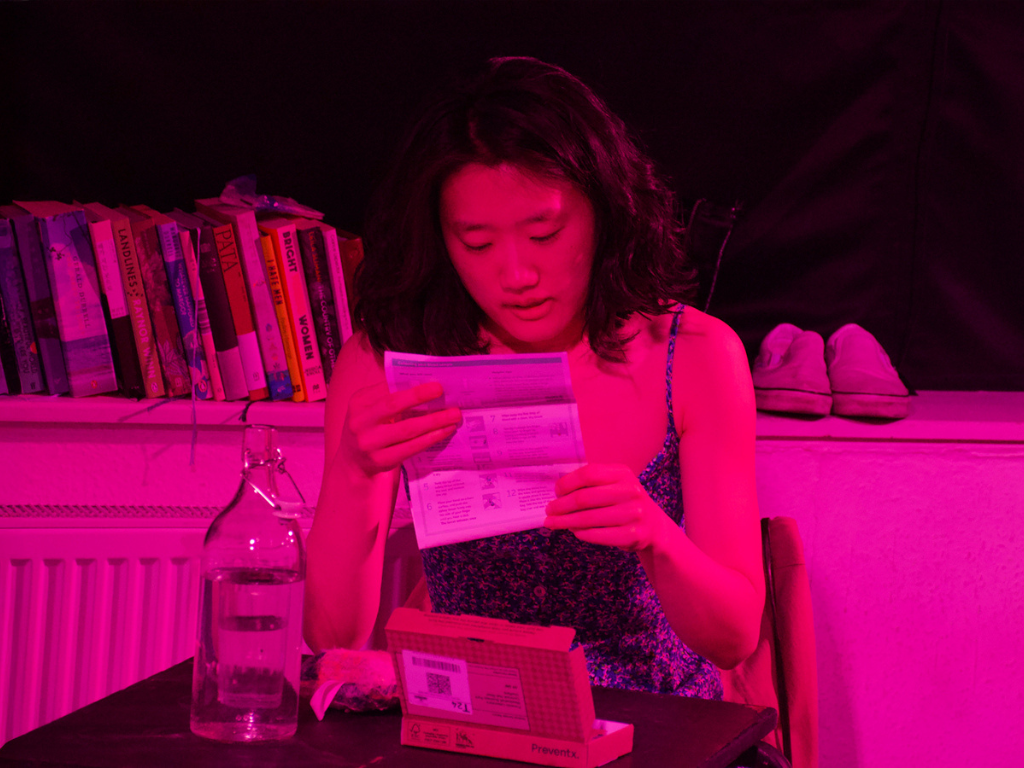
In He’s Six Years Older Than Me, South Korean performer and dance artist Taeyun Kim turns the ritual of taking an at-home STI test into a physical exploration of memory, sex and the agency we are allowed (or not) in our most intimate spaces.
As she warms her hands, moves her body and prepares to draw blood, seemingly ordinary gestures begin to trigger memories of past sexual encounters and questions about who makes decisions during sex, who has access to the information needed to make those decisions, and who is left dealing with the consequences afterwards.
We spoke to Kim about the culture shock that first inspired the show, finding memories through movement, and why she is still angry about the imbalance of responsibility that can follow sex.
If you had to describe He’s Six Years Older Than Me in just a few words, without using “sex”, “consent” or “age”, what would they be?
Female psychology, finding patterns.
Where did the show actually begin? Was there a particular memory, feeling or image that you kept coming back to?
I did an STI kit for the first time in my life in 2024, after I moved to the UK. I’m originally from South Korea and we don’t have such a thing there. Doing an STI test at home by yourself is quite a wild concept for us, we normally go to a clinic.
So that was my first experience, and it was really foreign to me. Of course, the instructions are really intimidating, but when I started talking to other people who are from here, they were also like, “Well, it’s scary every time I do it.”
That experience was quite shocking. It was a kind of culture shock for me, and I wanted to make something out of it… to create art from it. That’s how I started this piece.
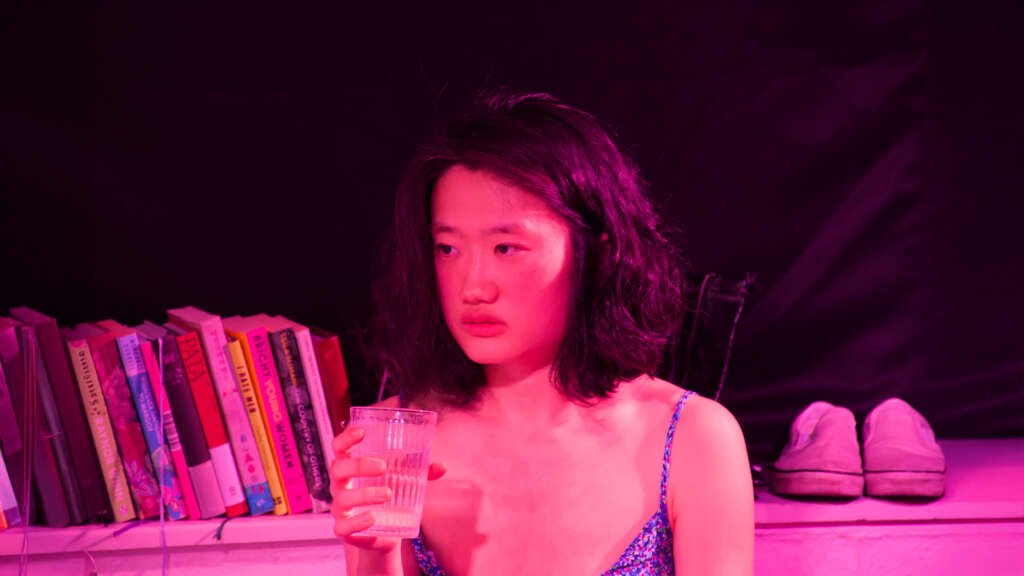
The show is very physical as well as verbal. How do you decide which parts of these experiences belong in language and which belong in the body?
The [STI, ed.] kit instructions tell you to warm your hands and warm your body for better blood circulation. I come from a dance background, so warming up, stretching and yoga are all quite familiar to me. I naturally started doing those kinds of movements to get myself ready to do the kit.
Because of those ritual-like movements, you naturally have this space in your mind to go back to memories. When you move your body, it becomes quite easy to focus on yourself and zone out, and suddenly you go back into a memory.
That’s how I started tailoring the movement, my memories and the text together.
Obviously I have the memory in my head, but I have to speak it out loud for people to know what’s going on in my head. So I wrote down everything that was happening in my mind, and then went back and forth between movement, text and language.
For example, when I touch my hand or look at my hand to warm it up, it reminds me of moments when I was looking at my hands, or his hands, or what our hands were doing. Were they holding each other? Were they touching each other? Where were they touching each other? I wrote down all the things that came into my mind when I looked at different parts of the body.
I also personally have these little tics, fidgety movements that I do when I’m nervous. I rub myself or scratch myself or touch my nose. Those are habits I naturally have every day.
In a way, they are part of my insecurity, because I think, “Oh my God, people are going to see that I’m nervous.” But at the same time, they are very natural movements that show your emotions. So they became a good resource when making a piece about emotion and how it relates to your body.
There are moments where somebody else makes or withholds a decision, but your body is the one that has to deal with what comes afterwards. How were you thinking about that imbalance when you made the piece?
I’m just so mad about it.
I think that’s the most real emotion I had when I started making this piece. When I started doing the test, I was thinking: why do I need to do all of this to get blood out of my finger because of a man who didn’t use a condom?
Is he doing the test? Is he doing the same thing? I would never know. Even if you tell him to do it, you never know.
That’s the raw emotion I still have every time I do this piece.
At the same time, that’s part of the nature of these sexual experiences: women so often hold more of the consequences that we need to deal with after the thing happens.
The fact that I do the STI kit onstage is a representation of what we do in everyday life after sex, when you encounter a stranger or a hook-up who isn’t your long-term boyfriend, partner or husband. In your twenties or young thirties, that may be most of the experience for a lot of us.
So yes, I would say I’m still mad. I’m still mad about that whole imbalance.
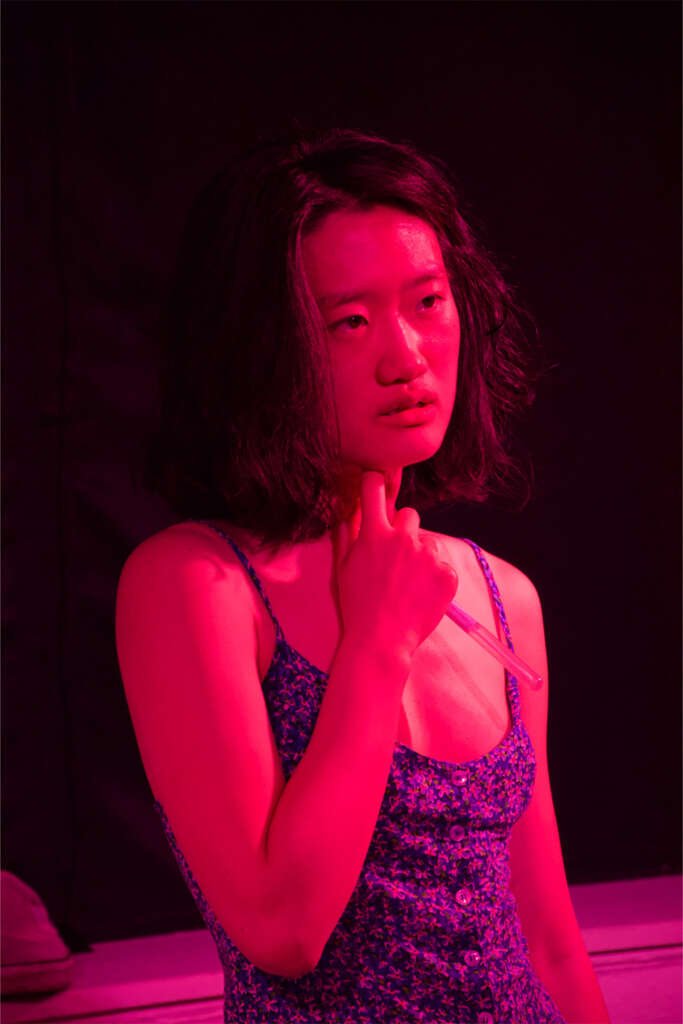
What are you hoping audiences will leave thinking about or talking about?
It’s quite hard to explain, but I want people to feel that she’s fine. I’m fine. We’re all fine.
Yes, it’s annoying, and yes, it’s infuriating that we have to do this and go through this. But at the end of the day, we get tested and we’re fine.
It might happen once or twice, maybe three times in our lives. It might happen again, but we learn things and we get lessons. We get better, and eventually we will have more agency to tell men, you know, “Do your thing.”
So I want people to think: yeah, she’s fine. It has happened to me, it happens to all of us, and we’re fine. We just live our lives.
You described the show as being about “female psychology” and “finding patterns”. How does that relate to the title, He’s Six Years Older Than Me?
The reason I came up with the title is because I actually met three men who were all six years older than me, all the same age.
I call this a female-psychology thing. When you talk with your friends, you start saying things like, “Oh, why do you always find a guy who is a Scorpio?” or, “Why do you always find a guy who is an artist?”
You start finding the pattern and trying to fix the mistake, or whatever happened to you, as if the problem was you.
So I thought it was a funny thing to say: “Oh yeah, I think the guys who are six years older are the problem.”
But so what? It doesn’t matter. It doesn’t matter how old they are. It doesn’t matter what kind of job they have or what their star sign is.
If you’ve ever had a similar experience as a woman, then you should come to the show.
You can follow Taeyun and her show on Instagram at @6ix_yrs_older.