
Self-care note: This wrap-up includes discussion of sexual abuse, anti-LGBTQIA+ policies and behaviours, gender based violence, and more. If you find this distressing or triggering, remember to take it at your own pace. You may prefer to read small sections, wait until you feel ready to read it all, or choose not to read it at all.
1. Glasgow venue cancels far-right event after pressure 🚫
A Glasgow music venue has cancelled an event organised by far-right podcaster and convicted domestic abuser John Watt after anti-racism campaigners raised concerns about it taking place.
Stand Up To Racism Scotland urged The Classic Grand to cancel the event, arguing it could become an unofficial gathering point following a far-right demonstration in the city. The venue said it had decided not to host the event because it wanted its live events to remain “welcoming and inclusive for everyone.”
Watt, who was convicted of abusing two former partners in 2018, denied the criticism and said the cancellation was based on “misinformation from the mainstream media”.
Source: The National
2. Glasgow exhibition highlights anti-LGBTQ+ laws across the Commonwealth 🏳️🌈
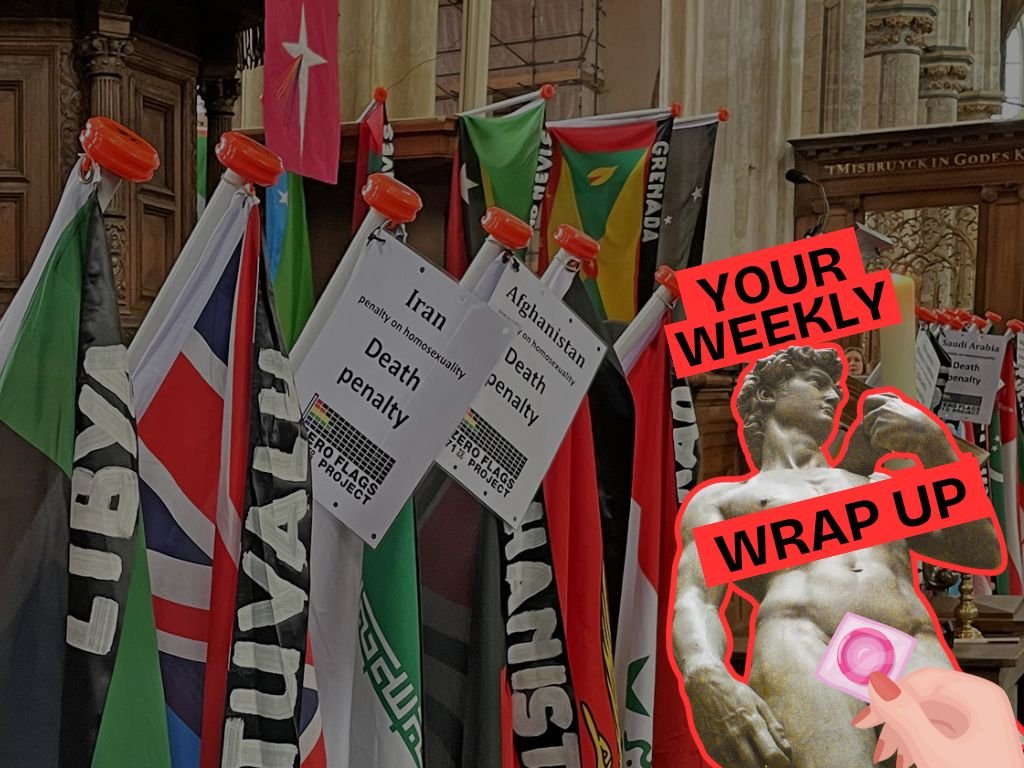
An outdoor exhibition in Glasgow will display the flags of Commonwealth countries that continue to criminalise consensual same-sex intimacy during the 2026 Commonwealth Games.
Each flag in the Zero Flags Commonwealth installation will carry a black mourning ribbon, drawing attention to the discrimination faced by LGBTQ+ people in those countries. Of the Commonwealth’s 56 member states, half still criminalise same-sex intimacy, with many of the laws rooted in British colonial rule.
The exhibition will form the centrepiece of Pride House Glasgow 2026, alongside workshops, screenings, performances and support for athletes and their delegations. Organisers say the installation is intended to encourage discussion about equality, colonial history and LGBTQ+ rights across the Commonwealth.
Source: Glasgow Times
3. Fifty women say partners pressured them into sex with strangers 🚨
Fifty women have told the BBC they were pressured or coerced by partners into having sex with strangers through swinging, often after encounters were arranged on the website FabSwingers.
Many said they agreed because they feared the consequences of refusing or felt responsible for keeping their partners happy. Six reported being raped by men they met through the site, while 16 said intimate images were uploaded without their consent. Several described long-term trauma and said they had not initially recognised their experiences as sexual abuse.
Campaigners and specialists say coercion can be hidden behind the language of sexual freedom, making it harder for survivors to identify or report abuse. The BBC investigation also raised concerns about the website’s moderation and response to reports, while FabSwingers said it prioritises allegations of assault and coercion and cooperates with police.
Source: BBC News
4. Most young women get health advice from influencers, survey reveals 📱
The majority of young women get their health and wellness information from influencers, a new survey has found.
According to research by the Pew Research Center, 57 per cent of women aged 18 to 29 get health and wellness information from social media influencers and podcasts. This is 10 percentage points higher than the proportion of young men.
Young women are also more likely than young men to come across online content about beauty and alternative medicine.
When asked why they look for advice online, most young women said they wanted to improve their health or lifestyle, while 19 per cent said they wanted to learn about things they did not want to ask their doctor about.
Source: Femtech World
5. PMOS could increase people’s risk of heart disease, study suggests ❤️
European Athletics and the European Broadcasting Union (EBU) have launched new guidelines aimed at preventing the sexualisation of female athletes.
Among the new recommendations is the need to avoid prolonged close-up shots of specific body parts and low-angle views from behind.
The guidelines ask broadcasters to focus solely on athletic performance and avoid any shots that do not help viewers understand the action or that could be considered inappropriate or taken out of context.
The new recommendations follow feedback from athletes who complained about camera shots that made them feel uncomfortable and sexualised them, rather than focusing on their performances.
Source: Reuters
6. Air pollution may increase the risk of preterm birth 🌫️
According to a new study, exposure to mixtures of air pollutants during pregnancy may increase the risk of preterm birth.
A team of researchers analysed data from more than 44,000 first-time mothers in Utah, United States, and found that exposure to even moderate levels of multiple air pollutants may increase the risk of preterm birth.
This is because pregnant people breathe more air than non-pregnant people, as pregnancy requires higher levels of oxygen. If air quality is poor, they are therefore likely to inhale more harmful pollutants than people who are not pregnant.
Source: News-Medical.Net
7. People in the US oppose “warning” labels for LGBTQIA+ content 🏳️🌈
A new analysis has found that people in the US do not support the introduction of “warning” labels for LGBTQIA+ content.
GLAAD and Morning Consult surveyed more than 2,000 people and found that over 60 per cent opposed the idea of such labels. They also agreed that showing diverse families on television helps children respect diversity and other people, while making LGBTQIA+ families feel seen and included.
The change was announced in April by the Federal Communications Commission (FCC), the independent US government agency that regulates communications across the United States, including radio and television. The agency proposed reviewing the TV ratings system to add warning labels for LGBTQIA+ content.
Source: LGBTQ Nation
8. US expands overseas abortion restrictions as African women face greater risks 🌍
The Trump administration is expanding restrictions on US funding for overseas organisations that provide or support abortion care, gender-affirming healthcare and diversity initiatives.
The policy could affect at least $30 billion in foreign aid, with reproductive health services in Africa particularly exposed because many healthcare systems depend heavily on international funding. The continent already has the world’s highest estimated proportion of unsafe abortions and some of the highest maternal mortality rates.
In Kenya, where abortion is legally permitted in limited circumstances but remains heavily restricted and stigmatised, campaigners warn that reduced funding could make safe care even harder to access. Researchers have also documented growing spending by US conservative organisations seeking to influence sexual and reproductive health policy across Africa.
Source: Africanews
Main image: The Zero Flags Project