

Self-care note: This wrap-up includes discussion of women’s health, anti-LGBTQIA+ policies and behaviours, gender based violence, and more. If you find this distressing or triggering, remember to take it at your own pace. You may prefer to read small sections, wait until you feel ready to read it all, or choose not to read it at all.
1. STI diagnoses fall in England, but concerns remain 📉
New data from the UK Health Security Agency shows sexually transmitted infection (STI) diagnoses in England fell by 8.3 per cent in 2025, with cases of syphilis and gonorrhoea both declining.
One of the most significant changes was an 18.7 per cent drop in syphilis diagnoses among gay and bisexual men, bringing rates to their lowest level in a decade. Health officials say expanded prevention measures, including doxyPEP and the NHS gonorrhoea vaccination programme, may already be having an impact.
However, the figures also highlight ongoing concerns. Syphilis diagnoses increased among heterosexual women, while chlamydia screening rates among young women fell by almost 10 per cent, raising fears that some infections may be going undetected.
Source: UK Health Security Agency
2. Emergency caesareans on the rise in England 🏥
One in four births in England is now an emergency caesarean, according to a new BBC analysis, which found a significant increase over the last five years.
The findings show that emergency caesareans have risen by 8 percentage points, while vaginal births have fallen from 53 per cent to 43 per cent of all births. Planned caesareans now account for 20 per cent of births.
Experts say there is no single reason behind this change. However, some sources told the BBC it could be linked to the recent deaths of mothers and babies in maternity units and a reluctance to perform caesareans.
Emergency caesarean rates are 22 per cent in Scotland, 20 per cent in Wales and 16 per cent in Northern Ireland. The increase has not been as sharp as in England, although up-to-date figures are not available for all three countries.
Source: BBC
3. New ovarian cancer drug gives patients more time 💊
A breakthrough drug to treat ovarian cancer is now available on the NHS, offering patients more time and fewer side effects.
The drug, called mirvetuximab soravtansine, extends patients’ lives, from 12.8 months on chemotherapy to 16.5 months with the new treatment, on average.
By delivering chemotherapy directly to affected tissue rather than to the whole body, the new drugs also reduces side effects. For example, patients may be able to keep their hair during treatment.
Source: BBC
4. Risks for LGBTQIA+ travellers rise worldwide 🏳️🌈
According to the LGBTQ Risk Map 2026, which analysed 233 countries and territories worldwide, LGBTQIA+ travellers face greater risks now than they did last year.
This is due to a growing wave of rights rollbacks that has occurred in many parts of the world over the past year.
Conditions for LGBTQIA+ people have worsened in several countries, including Belarus, India, Japan and the United States.
The map classified 91 countries as high risk for LGBTQ travellers, 62 as medium risk and 80 as low risk.
Source: Yahoo
Like what we do? Help us do more!
Pillow Talk Scotland is small, independent and community-led charity.
If you value having clear, shame-free storytelling on sex and relationships, please consider supporting us.
→ Make a one-off donation
→ Become a monthly supporter and help us make room for pleasure across Scotland
5. Italy introduces parental consent for sex education 📚
Italy has approved a new law requiring schools to get parental consent before offering sex education, as part of reforms backed by Giorgia Meloni’s right-wing government.
The law also excludes sex education from nurseries and primary schools. Schools will now have to inform families at least seven days in advance about any sex education initiatives, including details of outside experts or organisations involved.
Education Minister Giuseppe Valditara said the reforms would strengthen parents’ role in their children’s education and protect young people from what he described as “gender propaganda”. Critics, including opposition politicians and campaigners, argue the changes could restrict teenagers’ access to vital information about sex, relationships, health, and consent. A 2025 Save the Children survey found fewer than half of Italian teenagers had received sex education.
Source: Reuters
6. Hungary drops charges against Budapest mayor over Pride event 🌈
Hungarian prosecutors have dropped charges against Budapest Mayor Gergely Karácsony over his role in organising a Pride event in 2025.
Despite a ban imposed by Hungarian Prime Minister Viktor Orbán on Pride events, Karácsony found a legal loophole that allowed the event to go ahead. Tens of thousands of people gathered in Budapest in June 2025, leading to charges against the mayor for violating the law.
Prosecutors said they dropped the charges after the Court of Justice of the European Union ruled that Hungary’s anti-LGBTQIA+ law violated EU law.
Source: Reuters
7. Protesters march against rising cases of femicide in Kenya 🌹
On Monday, thousands of people marched in Nairobi, Kenya, to demand that the government take action against the rise in femicides and child disappearances in the country.
The protest was sparked by the femicide of Rachel Wandeto, a gospel singer who was attacked by three people using petrol and set on fire in May.
The march was one of the most well-attended protests against gender-based violence in recent months, with advocacy groups and protesters giving the government a 40-day ultimatum to declare gender-based violence a national crisis or face further protests.
Source: Al Jazeera
8. New bill puts Ghana’s LGBTQIA+ community at risk 🚨
On Friday, Ghana’s Parliament approved a bill that criminalises LGBTQIA+ identities and advocacy, leaving many LGBTQIA+ people living in fear.
As soon as the President signs the bill into law, anyone found guilty under its provisions could face a prison sentence of between three and ten years.
LGBTQIA+ rights groups have warned that the law puts the community at risk and could increase fear, discrimination and persecution of LGBTQIA+ individuals.
Leila Lariba, director of One love sisters Ghana which supports lesbians and bi women, said: “People are panicking and scared. The new bill affects where you are staying; it can get you evicted; it can lead you to lose your job.”
Source: The Guardian
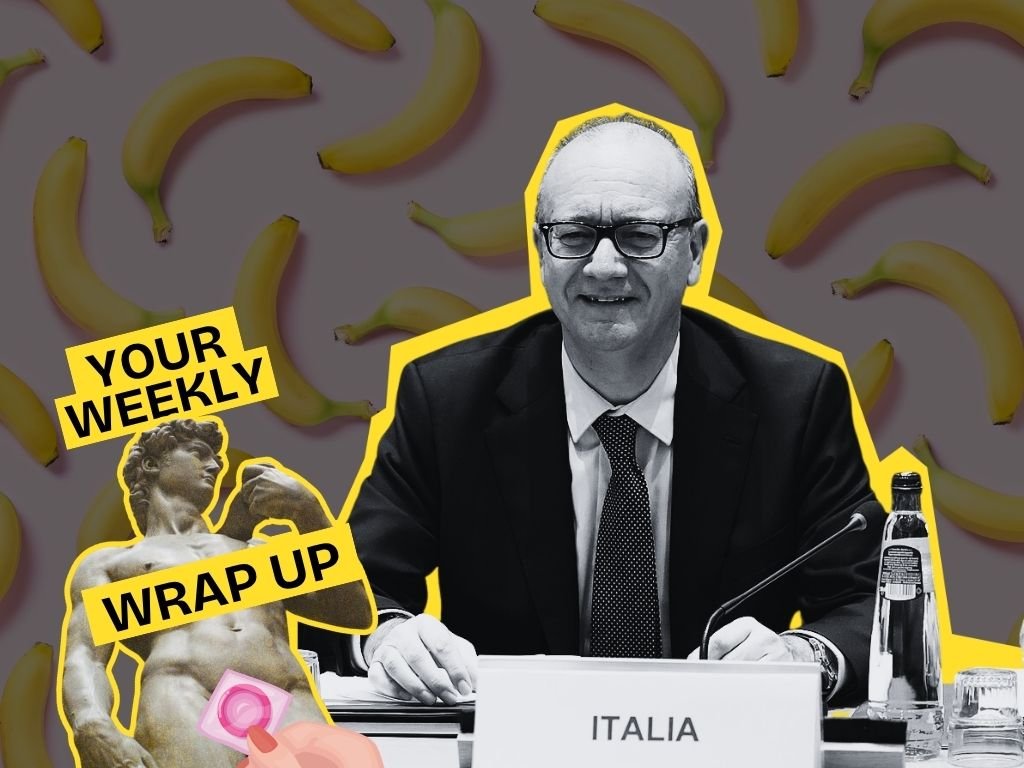
Main image: composite including a picture of Giuseppe Valditara, Italy’s Minister of Education and Merit. Credit: European Union