

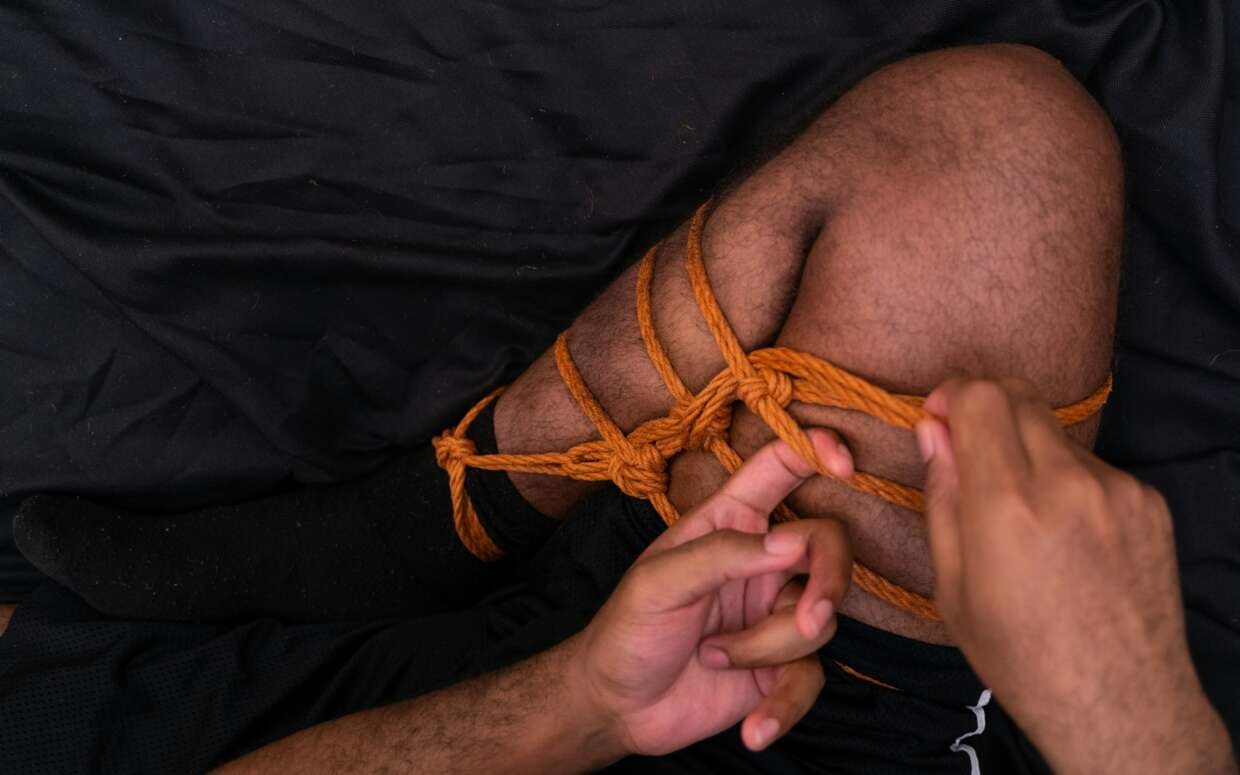
From Tik-Tok Shibari tutorials for beginners to kink-targeted dating apps like Feeld, it would appear that kink can be found just about anywhere online with very little user effort required.
Although I think that pleasure, desire and sexual exploration (in whichever form) should not be limited or gatekept by the social constraints of shame and the patriarchy, I have wondered how the surge in online exposure of kink over the last couple of years has affected kink communities. Moreso, is the internet allowing kink to flourish in all the right ways? Or has online access to kink started to become so great that it has the ability to threaten the levels of privacy and consent that are required for kink to actually exist whilst waiving individual accountability?
Kink certainly isn’t a new phenomenon, with some of the earliest records of BDSM (bondage, discipline, dominance, submission, sadism and masochism) practices dating back to ancient Greek and Roman times. It’s also no secret that the Victorians were lovers of the lash despite strict moral codes surrounding sex and sexuality.
In popular culture, the portrayal of kink really came into the spotlight through Steven Shainberg’s Secretary (2002), which follows the progression of a dom/sub relationship between a diffident secretary and her demanding boss. Come 2010, Rihanna’s controversial hit single S&M broke the UK charts with the lyrics ‘Sticks and stones may break my bones / But chains and whips excite me’ bellowing out from speakers across the country. And by 2015, the film adaptation of E. L. Jame’s kink centred novel Fifty Shades of Grey received widespread global attention despite criticisms surrounding its depiction of BDSM. Thus, as artistic expression began to embrace kink as part of the mainstream, it’s no surprise that the internet was soon to follow.
Kink is often understood as ‘an unusual habit or interest, usually of a sexual nature’. So it’s important to note that what kink looks and feels like can differ greatly depending on the desired experience of the individual(s), as well as influences from cultural, social and gender norms.
Although I have had and continue to have my own experiences with kink, I am not an active seeker of kink online. To explore how digital spaces shape kink culture, I spoke to artist and nightlife curator, Rian* (she/her), and Glasgow based designer, Josh* (he/him), both of whom are in their early to mid-thirties and engage with kink on and offline.
Access granted?
Studies conducted by Dr Liam Wignall at the University of Brighton in 2024 found that an estimated 20-30 per cent of adults in the UK have engaged in kink, whilst up to 70 per cent of adults have fantasised about it.
“Some of the things that make kink really desirable and almost irresistible is the fact that it’s not always available”, says Rian, who first experienced kink in a club setting. Then in her early 20s, Rian describes her initial experience as “eye-opening” and “interesting”. Until then “[kink] was somewhat taboo and hidden”, she continues. “It definitely made me think, what is that? Then I learned that it was kink”.
Just like Rian, Josh’s initial encounter with kink also came about in person. “It was probably in my early 20s when I met different people through sexual encounters and I wondered what was next? It was quite exciting”.
Some people online want to get involved as a clout thing, or to make fun of it but don’t understand kink and its intricacies.
Since then, kink has become significantly more accessible on the internet with mainstream online news platforms running articles on kink trends and culture. While this kind of coverage can help to destigmatise kink, it also raises questions about what gets lost when kink becomes easily accessible content.
Rian worries that online exposure can outpace the consent culture that makes kink safe. “A lot of people who have access online aren’t sometimes aware of the levels of respect and consent that’s necessary for kink to actually exist in a coordinated space”, she says. “Some people online want to get involved as a clout thing, or to make fun of it but don’t understand kink and its intricacies.”
At the same time, the internet can provide a space for those who anonymously engage with kink, or for others who simply want to learn more before taking anything offline.

Playing the Feeld
When it comes to meeting likeminded kink seekers online, Feeld is the most widely known app to do so. Established in 2014, Feeld was designed to take dating and connection out of the binary and instead placed ethical non-monogamy, polyamory and kink at the centre. Since then, the app has reported a consistent growth of 30 per cent each year since 2022 and is now one of most popular dating apps in the UK amongst the likes of Hinge and Bumble.
Once considered niche but now part of the mainstream, a significant segment of Feeld’s user base now consists of those who are dubbed as ‘vanilla’ or ‘conventional daters’ i.e. those who seek socially typical sexual and dating experiences. Despite this, Feeld still has the most inclusionary list of sexualities and gender representation(s) to choose from, with a specific feature dedicated to kink and desire preferences.
Josh, who has recently started exploring kink through the app, says that he has found it harder to find someone he clicks with on Feeld as opposed to in person. “I’m happy to chat about it, but finding somebody is a little bit harder”, he says. “I’d say a small majority are listing their kinks, from my experience”.
Some of the things that make kink really desirable and almost irresistible is the fact that it’s not always available.
Rian, who is also an active Feeld user, notes that the app can make kink feel more accessible. “It’s great that people feel it’s something they can explore”. However, she says that it can sometimes feel “quite claustrophobic” due to the location feature that most modern dating apps use. “You have people on these apps that you see on a regular basis that you’re quite interconnected with”, she explains. “I think sometimes that can stall the ability to explore kink”.
She adds that prior to Feeld’s popularity, more users felt comfortable being explicit in their bios because the chances of being recognised felt lower. “Kink exists in so many different formats, and sometimes in ways that are extremely grotesque”, and so “a lot of kink communities are much more underground and don’t use these apps as much,” she says.
Despite this, Rian states that “there are still people that use it for the original purpose” and “who are genuinely curious” about getting involved in kink.
The internet is a fast and fruitful digital jungle in which just about anything that springs to the human mind can be sought. So to limit the exposure of kink online would be just about as easy as trying to keep a lion in a straw cage. That being said, it is clear that the increased popularisation of online kink culture carries the risk of endangering an ethically stable framework built on trust, respect and consent that those involved in kink in the physical realm have worked so hard to maintain.
This article is part of Pillow Talk Scotland’s Bold Type Fellowship, a programme supporting emerging writers and journalists to publish bold, well-researched stories about sex and relationships. The Bold Type offers mentoring, workshops, and paid writing opportunities, with a focus on supporting those who have faced barriers to entering the media.
The fellowship’s first round was delivered thanks to funding from Women’s Fund for Scotland.
Want to keep up with our latest stories? Subscribe to our free newsletter for new writing, events, and resources.
*Names have been changed to maintain anonymity