
This resource answers common questions about gender, transgender identities and intersex variations, using simple and accessible language.
These questions came from participants in our Sex Ed for Grown Ups course.
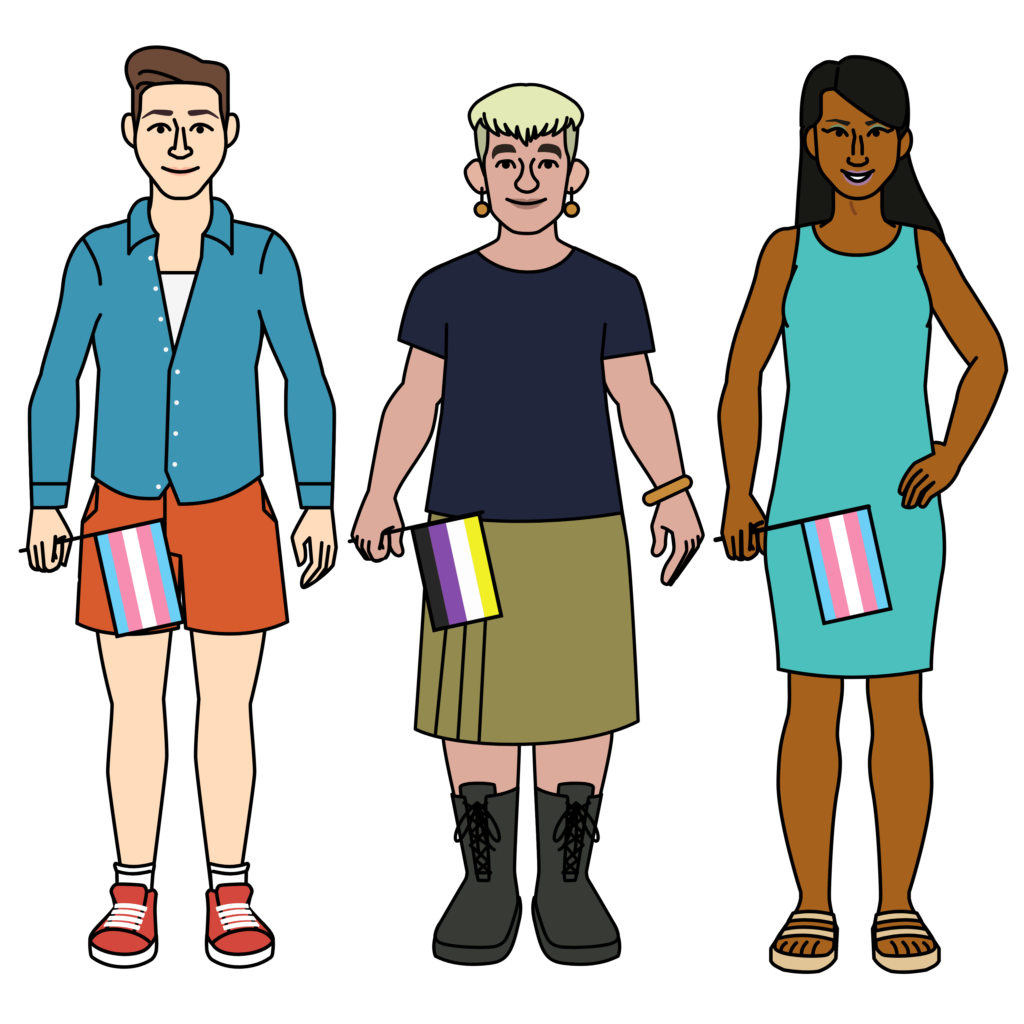
1. What is cisgender and transgender?
- A person is cisgender when their gender matches the body they were born with.
- A person is transgender when their gender is different from the one they were assigned at birth.
Most people’s gender matches the body they are born with. A lot of transgender people experience gender dysphoria which means they feel distressed or uncomfortable that their body doesn’t match how they feel about their own gender.
If you are unsure if you are trans, you can speak to a trusted adult or contact LGBT Health and Wellbeing at https://www.lgbthealth.org.uk/services-support/trans/
2. How do puberty blockers work?
Puberty blockers are medications that pause puberty.
This can be helpful for people still going through puberty who want to stop their bodies developing any further.
Puberty blockers have recently been banned in the UK for people under the age of 18.
Useful resources
Trangender: an easy read guide: https://hubble-live-assets.s3.eu-west-1.amazonaws.com/easy-health/file_asset/file/1038/Transgender-easy-read-guide-For-Web.pdf
What is gender? An easy read guide: https://www.mencap.org.uk/easyread/what-gender
3. What are intersex variations?
There are more than 30 different ways to be intersex.
Intersex variations can affect:
- Genes
- Hormones
- Genitals (private parts)
Intersex variations simpler language guide: https://oursite-easyread.wwda.org.au/sex-and-your-body/intersex-variations/
About this resource
This resource is based on real questions from disabled adults who took part in Sex Ed for Grown Ups, delivered by Pillow Talk Scotland with Three Sisters Consultancy.
The programme was funded by the Agnes Hunter Trust and is part of our work to make sex and relationships education more accessible and inclusive.
If you found this helpful, you can support us to keep creating free resources like this with a donation.
All illustrations thanks to SWIRL