“This was the only time where my life was really a sitcom.”
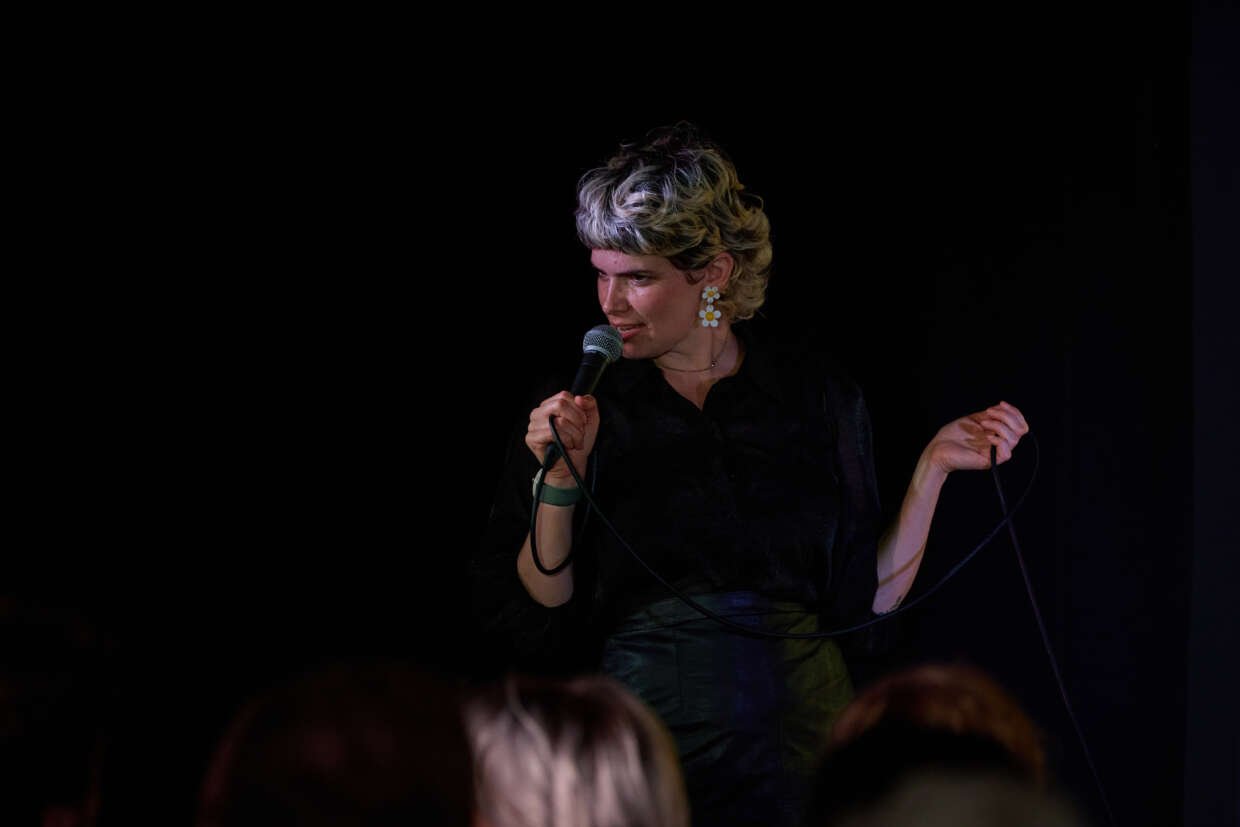
That was me, a few months ago telling an embarrassing story on a podcast that is purpose built for sharing embarrassing stories.
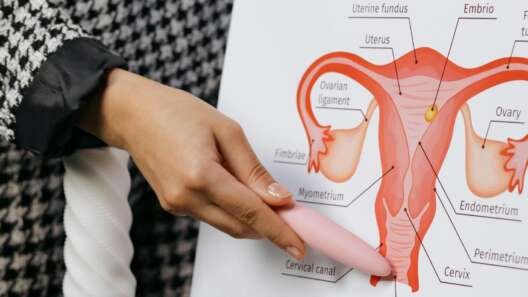
I was reminiscing about a time I misjudged my Mooncup’s capacity and ended up menstruating all over a white velvet chair. And to make things even comedically better, I was on a date. Now that almost ten years have passed, I was excited to look back on a time that was filled with shame, with a fresh lens. It was a classic case of time turning tragedy into comedy – something my humour thrives on.
Then the very first comment came in: “So basically you were bogging and can’t control your bodily fluids like an adult?”
Almost pre-empting criticism of antagonism towards anyone who menstruates, the comment continued: “If this was someone on a podcast talking about how they had shit on a chair it would be seen as disgusting like this should be.”
misogynistic (it definitely is), but because they actually typed out what so many people express as a more nuanced, “I just didn’t find it funny.” What was it about this story about a lived, personal experience that made this commenter so disgusted? Why, to them, is this subject matter off the comedy table completely?
I’m lucky enough to be a part of a comedy scene where female comedians are talking about “gross” stuff all of the time – or as others would call it, everyday life.
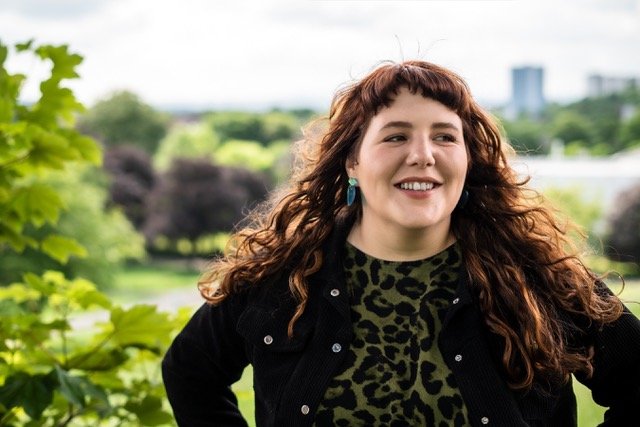
“It’s just a bumhole. We’ve all got one. Grow up,” Amanda Dwyer says to me with a laugh. Amanda is a Glasgow-based comedian who has a signature bit about going for a wax at a salon, which always gets a good reaction – even from male audience members who most likely haven’t experienced it.
“There’s definitely sometimes when people are a bit like, what the hell? (…) But usually I’m quite pleasantly surprised by how well they take it and how funny they find it.”
What happens when they don’t find it funny? There’s a well-known idea of the burden of representation on female and gender non-conforming comedians: when we don’t have a good show, we represent everyone of our gender, instead of being judged as individuals. It’s so ingrained in us that it can even affect our own writing.
“I had a lot of, probably internalised misogyny where I was like, do I want to be a female stand-up comedian who talks about periods?” Marjolein Robertson is a Shetland-born, London-based comedian who, in 2025, presented her show about menstrual health, “O”, at the Edinburgh Fringe. “There’s a shame about (endometriosis), so we don’t talk about it openly enough, and not talking about it leads to people suffering silently.”
Marjolein was extremely open about what the show was about, so that no audience wandered in unaware. Like a Paul Thomas Anderson before her, she warned, “There will be blood.” Despite that she still had people viscerally react to the subject matter, garnering 10 faintings and at least 18 walkouts.
Amanda also started her Fringe show, “I Did Something Bad” with a warning that she would be talking and joking about her experience with miscarriages. She offered a full refund and no judgement if anyone decided the show wasn’t for them. Nobody took her up on it.
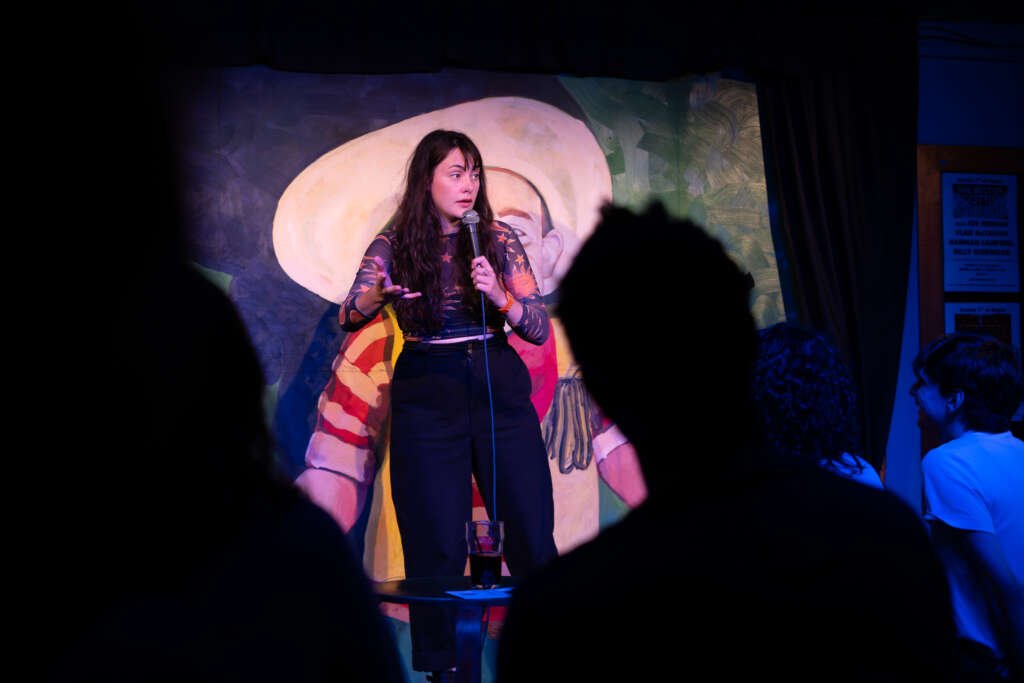
Neither comedian wanted to make their audiences uncomfortable, and both were well-reviewed, and well-received. Naming the potentially “gross” or gendered experience off the top made the audience take ownership of knowing what they were in for, and experience the show with that possible unconscious bias uncovered.
But as much as this can work for hour-long shows, club sets are a completely different experience.
I was once told by a prospective agent that I needed to drop a club joke because it “alienated the male audience, and men make up 75% of the average audience.” This statistic comes from nowhere – but from my personal experience, the gender split in the audience is becoming more and more equally split. The only reason there may be historically more men is that stand-up is a historical boys club. It’s not necessarily a safe experience for women to be a part of, even though we as performers have to make sure we take them into consideration.
“Men can enjoy my comedy as well. I feel like I try to make it accessible and I try and appeal to what’s human rather than intersectionality. And I think, you know, nobody is going to be for everyone. You’re obviously going to find your audience who you’re the perfect cup of tea for.” Newcastle-based Nicola Mantalios, recent winner of the Funny Women Awards, is both a stand-up and character comedian. Having the opportunity to do both, she can play with audiences’ perceptions as well as set her comedy free from those restraints.
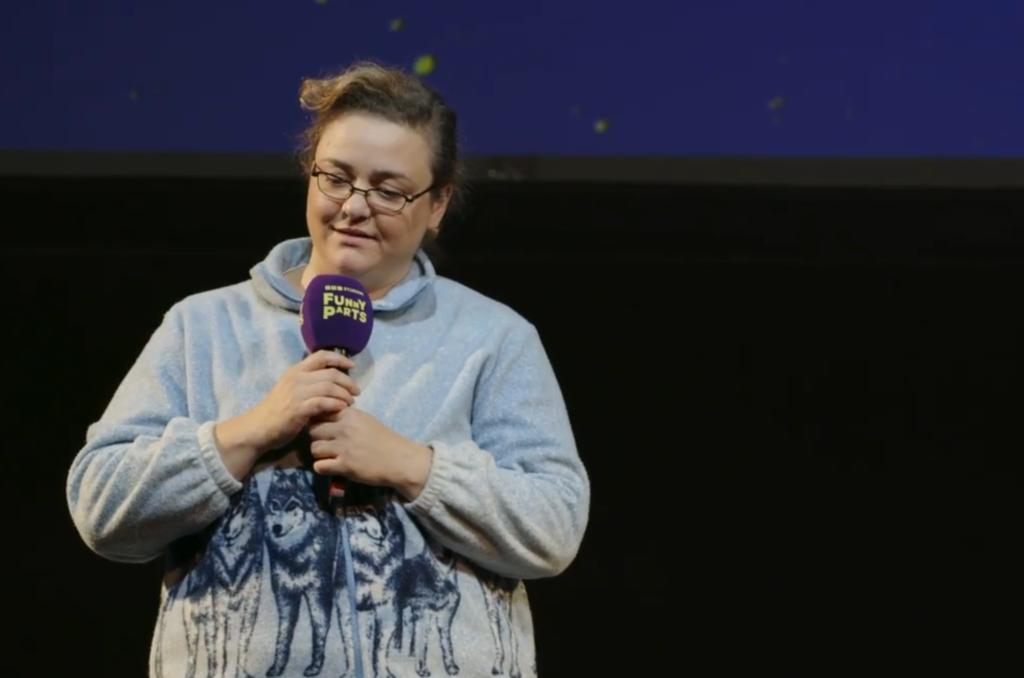
I’ve had audience members of every gender tell me that they don’t usually like female comedians, and I have to thank them, and take this as a compliment. It’s an odd thing to know that my gender and how I look is a hurdle to overcome, as soon as I step foot on the stage. This is partially what inspired Nicola to create her character, Zoe.
“I gave myself permission to not look nice. Um, I thought, you know what? That’s not what this is about. I was conforming to the pressures of the male gaze. So what I did was just put on a wolf vest, scrape my hair back, got some fake glasses, and I was like, if you want to judge me, you can judge this. And it was made of fleece and lycra, my costume. But it was like armour.”
Even us comedians fall into the trap of assuming male comedians have more power. As Amanda explains: “See, when a man comes up to me after a gig and says like, ‘oh, that was really good’ – when I first started, I used to find that really quite validating, probably more so than when a woman did it because I thought, ‘oh, they’re just doing that because I’m a woman’, you know? I’ve changed that mindset now. But you don’t even realise it’s so inherent in everybody.”
While talking to Nicola, I was struck by just how nuanced it is to try and dissect how a show goes: “Sometimes it could be that I’ve not delivered the joke. My timing might not have been right. Sometimes it might be that I was interrupted by a heckle. I might have forgotten something. I might have just done a slight intonation differently. You know, all of that can affect the delivery of your joke. But it also might be that there’s a stag party in and John thinks he’s funny. And so John doesn’t really want to listen to Nicola talk about flaps.”
The stand-up industry still treats men as the default audience.
Everyone I talk to agrees – men get away with more on stage. There’s decades of precedent for them to build on, both on stage and on screen. Perhaps we’re in the delayed stage of doing the same thing for people of other genders on stage, but with the current political climate that is outright harming trans people and threatening to tax women who don’t have children, I can’t help but feel we’re on a mission forward while others try to drag us back.
Of course, anyone can say anything on stage. I don’t get heckled or booed offstage when I’m performing. But I’m constantly aware that if someone in the crowd doesn’t question their unconscious bias, they’ll walk away thinking I just wasn’t funny. And every now and then I’m reminded that sharing a humorous anecdote will always be considered “disgusting” to some.
The real question is, if this is the world we live in, what do we do about it?
We have to trust that if we find it funny, others will too. And if we keep our voices strong, we will find the right people to laugh, as Marjolein says “If people are going to be weird when we talk about menstrual health, they’re not my audience.”
Marjolein continues, “I don’t know how to fight it other than just being funny. And being like, I’m happy to be here. You’re gonna enjoy this. Let’s go.”
Or, as Nicola puts in, “Funny fuckers can just be funny fucking.”
This article is part of Pillow Talk Scotland’s Bold Type Fellowship, a programme supporting emerging writers and journalists to publish bold, well-researched stories about sex and relationships. The Bold Type offers mentoring, workshops, and paid writing opportunities, with a focus on supporting those who have faced barriers to entering the media.
The fellowship’s first round was delivered thanks to funding from Women’s Fund for Scotland.
Want to keep up with our latest stories? Subscribe to our free newsletter for new writing, events, and resources.
Main image: Chris Dudley