

When women cry out and are still not heard, the problem is not their silence — but a system that too often fails to listen.
Across Scotland, many continue to face delayed diagnoses, dismissive attitudes and healthcare structures that do not fully account for how female bodies experience pain. This is particularly evident in conditions such as endometriosis, which affects around one in ten women and people assigned female at birth.
For Abie-Lee Baxter, 26, from Edinburgh, the condition has reshaped her daily life. It causes severe pain, chronic fatigue and weakness, affecting her confidence, relationships and mental wellbeing. After repeated trips to the doctor, she began to question herself.
“At one point, I thought the debilitating pain was normal,” she said.
Almost ten years after first noticing her symptoms and undergoing surgery, she was finally diagnosed with endometriosis last year — which continues to affect her both physically and emotionally.
“It’s taken quite a toll and made my anxiety worse. When I feel a flare-up coming, I know I’m going to have to deal with all this pain — and that’s exhausting in itself.
I’m at an age now where you feel pain is pain — you just get on with it. But that shouldn’t be the case.
“I do wish people understood that women aren’t asking to be taken seriously because they want special treatment, but because the pain is real and significant. It’s made me realise I know my body best — and endometriosis still isn’t spoken about enough.”
However, unlike Abie, her sister Amber has spent years searching for answers to similar symptoms without receiving a diagnosis. Despite testing, doctors do not believe she has endometriosis, though she remains unconvinced.
“It’s been uncontrollable and miserable. You constantly wonder what’s wrong with you,” she said. “I went through cycles of intense body pain, and they just kept telling me to stretch and do yoga — it felt like no one was putting one foot forward to help me.”
Now, as a last resort, she is considering paying between £300 and £1,000 for a private MRI scan — a considerable cost, especially for someone balancing work and study.
Abie and Amber’s experience reflects a pattern that spans generations.
Their mother, Isobel, has suffered stomach problems for years and is also living with a prolapse. She sought medical help and started physiotherapy, but after missing a single appointment because of working twenty-two consecutive days, she was removed from the surgical waiting list. She says the wait had been estimated at seventy months.

Now, before she can even rejoin the list, she remains in pain.
“I do think women’s health is pushed to the backburner,” she said. “I can see things have come far over the years, but there’s still not enough being done.
“I’m at an age now where you feel pain is pain — you just get on with it. But that shouldn’t be the case.”
But being ignored is only one part of the problem. For many women, symptoms are not dismissed outright – they are explained away.
Serious conditions are often attributed to hormones or periods. Saskia Pullar, 23, from Arbroath, experienced this first-hand.
When she sought help for severe abdominal pain, she was told it was “just period pain.” Two weeks later, she was told it was an ovarian cyst.
In reality, it was appendicitis.
It hit me that I could’ve died if my appendix had burst. I am not the first woman to go through this, so why is there no solution?
Six months later, after continued pain, she returned to A&E, where she claims a doctor told her: “You cannot come to A&E whenever you don’t feel well.”
The next day, she was in surgery.
“I was so tired of it all — being told it was ‘just’ stomach issues and nothing serious,” she said. “Out of about seven doctors I saw, only two really listened. I was relieved something was finally being done. It hit me that I could’ve died if my appendix had burst. I am not the first woman to go through this, so why is there no solution?”
Her experience has left her questioning how women’s pain is assessed.
“Declaring women’s pain as being caused by their uterus is lazy,” she said.
For Saskia’s mother, Claire, the struggle to be heard began decades earlier.
It took four years for her underactive thyroid to be diagnosed.
“I had bought ovulation tests and over three months they showed I hadn’t ovulated,” she said. “So, I went to my GP with the results, but he brushed it off and told me it was ‘perfectly normal’. I knew it wasn’t.”
After taking supplements, she became pregnant — but miscarried soon after. Later, it was only during treatment in an Early Pregnancy Unit that another doctor identified the thyroid condition.
“If I hadn’t encountered that doctor, I don’t believe I would have had my diagnosis — and I wouldn’t have had my second child,” she said.
She believes her experience reflects a wider systemic issue.
“Women’s health still comes second,” she said. “Humans do not come in a one-size-fits-all model. We need healthcare that is responsive and willing to look beyond a checklist.”
Despite her frustrations, she says she is encouraged to see younger women speaking up.
“Women must be present in conversations about their health needs. They must advocate for themselves. No one else can or will.”
Campaigners acknowledge that NHS staff work under significant pressure but say gaps in care remain. Charities such as Endometriosis UK are stepping in to provide support.
Vicky Chapman, 37, volunteers as a support group leader for the charity’s Tayside community, which has more than one-thousand members. She was diagnosed with endometriosis in 2018.
Humans do not come in a one-size-fits-all model. We need healthcare that is responsive and willing to look beyond a checklist.
On average, diagnosis takes ten years and two months in Scotland.
“More people sharing their experiences helps,” she said. “But GPs often want patients to try various treatments before referring them, which can cause delays.”
She believes awareness has improved, but stigma remains.
“There’s more understanding now, but there’s still a lot of taboo. More funding, visibility and research will help.
“Sometimes people are too exhausted to advocate for themselves. But it’s important — and others need to be mindful that every experience is different.”
In January 2026, the Scottish Government published Phase Two of its Women’s Health Plan, which includes commitments to reduce diagnosis times and tackle long gynaecology waiting lists.
Advocates say it will be a pivotal period in determining whether those commitments translate into meaningful change for the estimated 1.5 million people in the UK living with endometriosis.
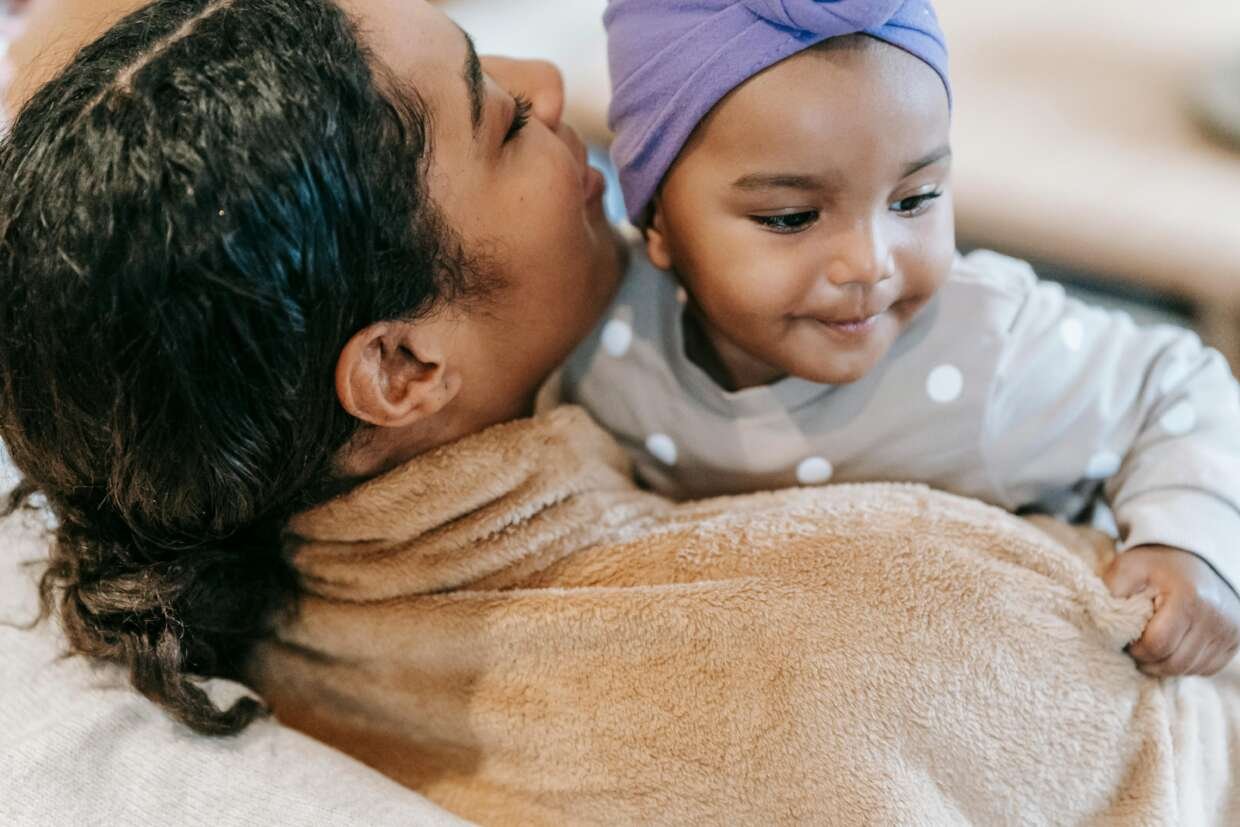
For mothers and daughters, the hope is simple: that the next generation of women will be believed sooner, treated faster, and spared the struggle of proving their pain is real.
This article is part of Pillow Talk Scotland’s Bold Type Fellowship, a programme supporting emerging writers and journalists to publish bold, well-researched stories about sex and relationships. The Bold Type offers mentoring, workshops, and paid writing opportunities, with a focus on supporting those who have faced barriers to entering the media.
The fellowship’s first round was delivered thanks to funding from Women’s Fund for Scotland.
Want to keep up with our latest stories? Subscribe to our free newsletter for new writing, events, and resources.