Self-care note: This week’s wrap-up includes discussion of suicide, sexual violence, domestic abuse, discrimination against LGBTQIA+ people and pornography. You may prefer to read small sections, wait until you feel ready to read it all, or choose not to read it at all.
1. SNP faces potential legal action after cancelling anti-abortion conference event ⚖️
The SNP has cancelled a fringe event organised by anti-abortion group Society for the Protection of Unborn Children (SPUC) at its annual conference in Aberdeen, following objections from party members and reproductive rights campaigners.
The event was due to discuss abortion coercion and whether Scotland should introduce a specific criminal offence for pressuring someone into ending a pregnancy. Campaign group Women for Independence called for its cancellation, criticising SPUC’s wider opposition to abortion rights, contraception and aspects of sex education. More than 250 people signed a petition opposing the event.
The SNP acknowledged that allowing the event had been a mistake and said it wanted its conference to be a welcoming space for members. SPUC criticised the cancellation, arguing that it breached equality legislation, and said it would seek legal advice. No legal proceedings were reported at the time.
Source: The Herald
2. Glasgow protesters condemn violence against women and its ‘weaponisation’ by the far right ✊
More than 1,000 people gathered in Glasgow city centre for a Reclaim the Night rally, calling for greater action to tackle violence against women and girls and increased funding for rape crisis centres, domestic abuse refuges and other support services.
Organised by Sisters Against Cuts, the demonstration brought together women’s rights and anti-racism campaigners, who accused far-right groups of using sexual violence to promote anti-immigration narratives and target minority communities.
Speakers also criticised a proposal by Reform UK MSP Thomas Kerr to ban the burqa, arguing that restricting women’s clothing choices would not address violence against women. Organisers welcomed the Scottish Government’s recent commitments to tackling misogyny but called for more investment in prevention and survivor support.
Source: The National
3. Shortage of legal aid solicitors leaves domestic abuse survivors without representation in Scotland ⚖️
Women experiencing domestic abuse in Scotland are increasingly struggling to find solicitors who can represent them, according to legal charity JustRight Scotland.
The charity’s Scottish Women’s Rights Centre says it is hearing from growing numbers of women who cannot access legal representation when leaving abusive relationships or navigating family law proceedings. Some are being forced to represent themselves in court, potentially facing their alleged abusers without legal support.
As a Scottish Government consultation on legal aid closed on 13 October, JustRight Scotland called for urgent reforms to address the shortage of legal aid solicitors, improve funding for their work and simplify the application process. The charity warned that requirements to provide financial documents can create additional risks for survivors whose finances are controlled by an abusive partner.
Source: JustRight Scotland / STV News
4. BBC faces criticism for blurring pro-trans slogan on Strictly Come Dancing 🏳️⚧️
The BBC has faced criticism after blurring a T-shirt worn by Strictly Come Dancing contestant Bethany Antonia featuring the slogan “Protect The Dolls”, a message of solidarity with transgender women.
The House of the Dragon actor wore the T-shirt during rehearsal footage shown on 10 October. While the slogan was visible in some shots, it had been blurred in others, prompting viewers to question the decision. The slogan was popularised by designer Conner Ives in 2025 through a fundraising T-shirt supporting the US charity Trans Lifeline.
Responding to the criticism, the BBC said it routinely takes steps to limit the appearance of branding and slogans on entertainment programmes, regardless of their message. Antonia, who is competing in this year’s only same-sex partnership alongside professional dancer Nancy Xu, has previously spoken about the importance of LGBTQIA+ representation on the show.
Source: The Independent
5. New research reveals why perpetrators spike people’s drinks 💊
A new study by the University of Birmingham and the Home Office has explored the motivations of people who spike others, finding that some perpetrators describe their actions as a joke or a way to make nights out more entertaining, despite the serious harm they can cause.
The findings come as new figures reveal that more than 2,700 spiking-related offences were reported to the Metropolitan Police in the year to September 2026, but only 131 resulted in a charge, caution or summons. Researchers also identified different methods of spiking, including the use of alcohol, medication and other substances.
The UK Government has launched a new awareness campaign aimed at perpetrators rather than potential victims, challenging the idea that spiking is harmless or funny. Spiking has also been established as a specific criminal offence under the Crime and Policing Act 2026, carrying a maximum sentence of 10 years in prison.
Source: Metro
6. UK to ban porn depicting choking and incest 🚫
Online pornography depicting strangulation or sexual activity between certain relatives will be banned in England and Wales from early November, the government has announced.
The decision follows a 2025 review which found that this type of pornography can influence real-life relationships, normalise certain forms of sexual violence, and have “devastating consequences” on those subjected to it.
It will also be illegal to possess or publish content showing adults role-playing as children, as it may “contribute to an interest in behaviour that would otherwise be illegal in real life, such as child sexual abuse”.
Source: Sky News
7. Trans people to be placed on wards according to their birth sex, NHS says 🏥
Under new NHS guidance, transgender patients accessing hospital care will be placed on wards according to their birth sex rather than their gender identity.
This means that transgender women could no longer be placed on female-only wards, and use female-only toilets and changing rooms. The guidance also states that trans people’s “privacy, dignity and safety” must still be ensured.
Trans rights organisations have warned that this is not “the most clinically appropriate decision” and that it could deter transgender people from seeking medical care.
Source: The Guardian
8. Experts warn against self-medicating for menopause symptoms⚕️
While some HRT products are in short supply, experts have warned that people experiencing menopausal symptoms should not try to manage them through self-medication, but should instead contact their doctors or local pharmacists.
Currently, major brands of HRT patches are facing supply disruptions across the UK due to manufacturing or distribution delays, the Department of Health has confirmed.
However, trying alternatives without medical supervision could cause side effects or prove less effective, leading to further frustration.
Source: BBC
9. MPs call for better recognition and treatment of chronic UTIs 🩺
Labour MP Dr Allison Gardner is leading calls for better recognition and treatment of chronic urinary tract infections (UTIs) after sharing her experience of living with debilitating symptoms for more than a decade.
Gardner said she repeatedly struggled to access appropriate treatment and felt dismissed by healthcare professionals, despite experiencing severe pain. Her symptoms began during perimenopause, and she later experienced significant relief after being prescribed hormone replacement therapy (HRT). According to the Chronic Urinary Tract Infection Campaign, more than 1.6 million women in the UK experience chronic lower urinary tract symptoms, although there is currently no agreed medical definition of chronic UTI.
A panel of medical experts is working towards establishing a formal definition by 2027, which could improve diagnosis and treatment. Meanwhile, a cross-party group of MPs is calling for better GP training, increased research funding and a system allowing patients to share their medical history without repeatedly explaining their symptoms.
Source: BBC News
10. Trans rights protesters disrupt Harry Potter red carpet in London 🏳️⚧️
Trans rights campaigners interrupted the red carpet ahead of a gala performance of Harry Potter and the Cursed Child at London’s Palace Theatre, in protest against author JK Rowling’s stance on transgender rights.
Several protesters, wearing masks and hats, entered the red carpet and lay down before being removed by security. One wore a T-shirt reading “Rowling money kills”, apparently criticising the author’s involvement in campaigns opposing aspects of trans rights.
Rowling has faced criticism for her views on gender identity and has established a fund to support legal cases involving sex-based rights. The demonstration took place ahead of a special performance celebrating a new, shorter version of the stage production, which has been condensed from two parts into one.
Source: The National
11. Hungary amends Orbán’s anti-LGBTQIA+ legislation 🌈
The Hungarian parliament has voted to amend the measures introduced under former Prime Minister Viktor Orbán that stigmatised LGBTQIA+ identities.
With 139 votes in favour and 51 votes against, Hungarian MPs passed a bill to scrap the so-called child protection legislation, which banned the “portrayal” or “promotion” of LGBTQIA+ identities.
The new bill instead aims to protect minors from content that could “seriously impair the child’s physical, intellectual, emotional or moral development.”
Source: Euronews
12. One in four male US soldiers may have low testosterone, study finds 🧪
A new study suggests that around a quarter of male soldiers in the US Army have testosterone levels below the commonly used clinical threshold, raising questions about a new policy requiring annual testosterone screening for service members aged 30 and over.
Published in JAMA, the research analysed blood samples from 479 active-duty male personnel and found that 26 per cent had testosterone levels below 300 nanograms per decilitre, rising to 33 per cent among those aged 30 and over. Researchers estimate that more than 100,000 male soldiers across the US Army could have similarly low readings.
However, experts warned that a low testosterone reading alone does not necessarily indicate a medical deficiency, as levels fluctuate and diagnosis also requires symptoms. While testosterone replacement therapy can benefit people with a confirmed deficiency, there is insufficient evidence that it improves military performance, and treatment can carry risks, including reduced fertility.
Source: New Scientist
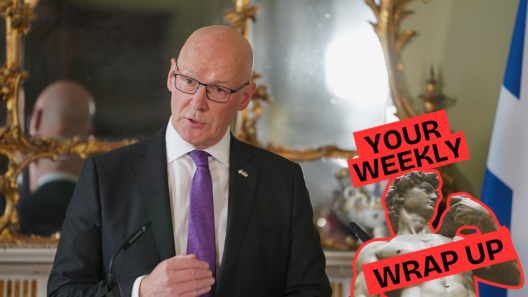
Main image: Scottish Government