



I grew up in a French-Algerian Muslim family where polygamy, understood as the legal possibility of contracting multiple marriages, was not spoken of as barbaric or inherently oppressive.
What I prefer to call polygamies, following Melanie Heath’s work, were instead seen as alternative forms of union.
Within my extended family, I witnessed firsthand the many ways polygamies could be lived and experienced. At times complex, loving, and meaningful, and at others painful, exploitative, and deeply unequal, much like relationships of any kind.
Years later, as a psychosexual and relationship therapist based in Scotland, I found myself immersed in a different conversation about non-monogamy, one dominated by the language of polyamory and ethical non-monogamy (ENM), also known as consensual non-monogamy (CNM).
Relationship models don’t exist in a vacuum, they have an anthropological, political and social function.
At first, I was drawn to this concept, which sounded inclusive and seemed to offer the possibility of reclaiming and reshaping family structures such as polygamies, long erased, stigmatised, and distorted through centuries of imperialism and colonial domination. It also appeared to provide an important opportunity to connect anti-colonial struggles with the emancipation of Gender, Sexual and Relationship Diversity which remains criminalised in many regions of the world where polygamy itself is otherwise legally permitted.
Plot twist: my naive expectations met a series of dismissive comments, patronising lectures, and seriously questionable lack of education regarding how non-white multiple-partnered ethical relationship systems far preceded the publication of The Ethical Slut in the 90s.
My disappointment peaked in 2025, at a professional conference, during the Q&A following a talk on ENM by a highly respected psychologist. As a junior practitioner and a non-native English speaker, I felt deeply intimidated. I first typed my question into the conference chat, then, after being invited, timidly voiced it aloud to a large professional audience. My question concerned the neo-colonial implications of excluding polygamy from ENM conversations. As I spoke, a familiar spiral set in: have I missed something? Is this a stupid question? Am I being offensive to this expert?
Her response was brief and strikingly dismissive. In essence, it was: “Polygamy is illegal, as far as I am concerned, but you should go and see this expert [a white woman whose work addresses polygamy exclusively through the lens of US Mormon communities]. She talks about it wonderfully.” I was stunned by what felt to me like an unapologetic display of contempt from a senior mental health practitioner, yet I politely acknowledged the response and muted my microphone.
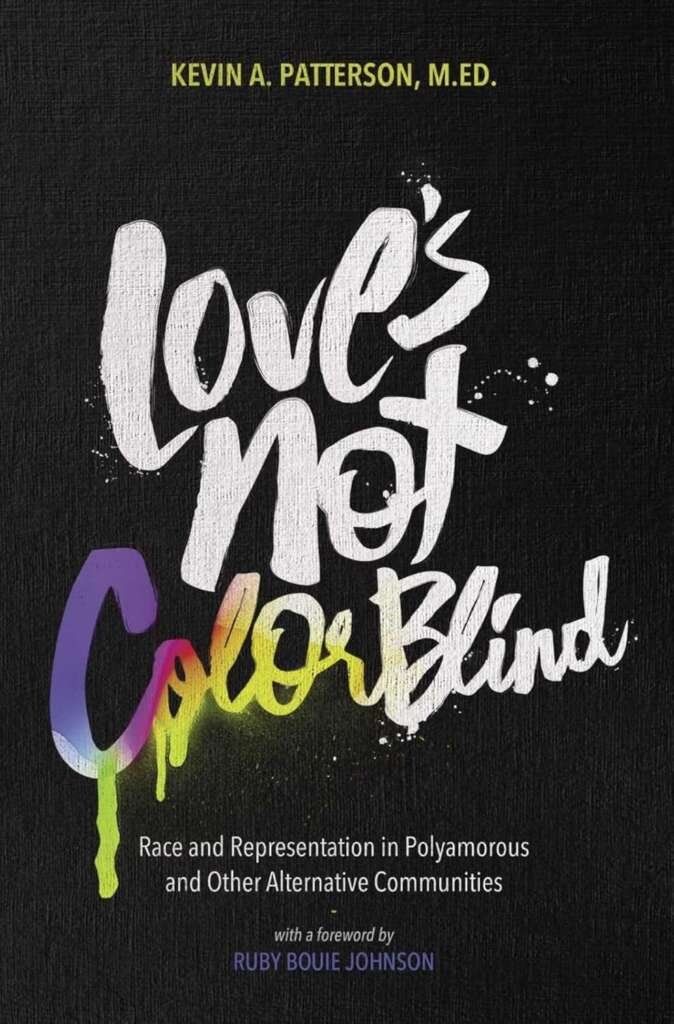
As Kevin A. Patterson highlights in his book Love’s Not Colorblind, most iconic publications in the field of ENM were written by white, Western, and cis-gender women. Through reading these authors, I’ve sensed that their viewpoints often contribute to dismissing, obscuring or othering the multi-millennial practice of non-white polygamies, and undermine the social positioning it takes to practice ENM optimally.
An example would be the most recent edition of The Ethical Slut, meant to reach, with a conscious “intersectional” approach, “people of all races, genders, orientations, and backgrounds.” Dossie Easton and Janet Hardy praise as “utopian sexual community,” “spiritual sex practitioners,” “Poly Pioneers” the Oneida Community: a product of settler-colonial America founded in upstate New York, which lived on the questionably acquired land of the indigenous Oneida Nation and even audaciously adopted their name.
But in their book, the authors totally omit Islamic law, a major reformer of polygamous relationships in the 7th century that limited the number of spouses, codified succession and property rights for wives and children, and emphasised emotional, social, spiritual, and even sexual fairness among wives.
Equally, they could have cited other well documented non-monotheist or non-polygynous examples such as the animist Turkana pastoralists of north-western Kenya, or the millennia-old walking marriages of the Mosuo matrilineal communities of Southwest China. But they didn’t either, and all these omissions are striking.
I asked polyamory educator Leanne Yau about how race, culture, and colonial histories may influence the erasure of polygamies within ENM discourse. According to her, “There is a racism angle here where people make a lot of assumptions about what all polygamy looks like when it is actually much more nuanced than that.” She added that polygamy’s marginalisation in contemporary non-monogamous narratives may stem from the fact that “people don’t want to educate [themselves] about something they don’t know so much about, or maybe they are not from that culture and so they don’t want to speak for people of colour.” On her platform, Yau also amplifies the views of black content creators such as Marjani Lane, who openly points out connections between imperialism, white-supremacy, and polygamy.
Relationship models don’t exist in a vacuum, they have an anthropological, political and social function. As historian Sarah M. S. Pearsall outlines in her book Polygamy: A Very Short Introduction, multi-partnered relationships were very often observed among elite men engaging in polygyny, and could serve to advance the social status of women and their children, to redistribute wealth, create solidarity between spouses, support community subsistence, alleviate household work, bind populations together in order to protect religious and cultural identities, forge strategic political and military alliances, consolidate territorial, military or productive agency in situations of war, hardship, scarcity, occupation and colonisation at a level that most Westernised societies didn’t have to face.
These patterns could maybe help explain why polygamies are most prevalent in collectivist and indigenous societies, while ENM appears rooted in individualist and globalist paradigms, emphasising autonomy and self-directed needs over community building.
The belief on what is ‘ethical’ is rooted in privilege; like class, socioeconomic status, ethnicity and culture.
Beck Harrison, Contemporary Institute of Clinical Sexology
Hannah*, a 25-year-old polyamorous woman based in the central belt of Scotland, graciously discussed with me her views on her relationship structure, which provides her with “much more freedom” and aligns with her “limitless amount of love, (…) ability to connect to people and have deep relationships that matter [to her] on the same level with multiple people.”
But she also acknowledged the structural advantages of marriage. During Covid, she recalled, “non-married partners were not permitted into the hospitals but married partners were able to visit them.”
Hannah said “a woman in a polygamous marriage would have more rights should that relationship end.” She added: “Even if you shout about how non-hierarchical you are, if you are married to somebody there is this universal assumption that it’s the most important one, your main one, your favourite, that means that I am not that, as I am not married to anybody.” She also shared “As I get older, I am realising that building stability and creating a life is geared towards monogamy,” concluding, “I am not in a very secure situation, I am not in an as secure situation as my partner and his wife are, and regardless of whether or not I was to breakup or if I got sick or anything, there’s no financial protection for me.”
I asked Beck Harrison, Gender, Sexuality and Relationship Diversities Lead at CICS about the potential limitations of ENM. They said: “the belief on what is ‘ethical’ is rooted in privilege; like class, socioeconomic status, ethnicity and culture.” Which resonated with my views as a relationships therapist.
Although I acknowledge the discomfort it may bring to some, I feel that it is crucial to remember that in order to realistically have a chance to be both ethical and polyamorous, one must be financially and socially independent.
One must have sufficient time and resources to engage equitably with multiple partners, and the practical ability to visit or communicate with them regularly. Living arrangements must allow for hosting multiple people or offer comparable flexibility. One also needs the cultural capital to engage with polyamorous literature and CNM guidance, along with the emotional capacity to apply it. Reliable access to contraception and STI protection is essential, as is living in an environment that is safe, free from gender and sexuality based systemic violence or criminalisation, and which provides accessible medical and mental health care.

Beck Harrison also notes that although “styles of relationship aren’t inherently ethical or non-consensual,” in ENM contexts, “Those with the most power typically get to decide which practices are ‘good’, and which are not. In the UK, that tends to be white, middle class, financially stable couples.” On the other hand, Burkina Faso (36 per cent), Mali (34 per cent), and Niger (29 per cent) have among the highest incidence of polygamies. All three are part of the Sahel, all former French colonies, and all have faced decades of political, economic, humanitarian, and ecological agony.
And this realisation is exactly where these enchanting, and boldly promising lectures on how to be ethical in multi-partnered relationships too often lack realism and self-awareness. This guidance are provided by best-selling authors, highly visible public figures who professionally and economically greatly benefit from what increasingly feels to me like a self-indulgent spectacle of privilege which becomes at times offensively dismissive of the less privileged, among which, most communities practicing polygamy.
Polygamies are often stigmatised in the West because they almost exclusively take the form of polygyny (one husband with multiple wives) and are viewed as reinforcing patriarchy and women’s subordination. While women’s rights are generally weaker in countries where polygamy is legal, the possibility of reverse causality is rarely considered, namely, that polygamous family structures may stem from pre-existing structural inequality which goes beyond gender asymmetry.
Nevertheless, polygamies continue to evolve in countries where they are permitted. Their ethical implications are being regularly reexamined, native feminist voices are contributing to the debate, real-life experiences are being considered, family laws are being amended, and the mental health impacts on spouses and children are being studied. These changes take time as, whereas ENM depends on informal agreements within small groups and doesn’t challenge the monogamous order they thrive in, polygamies are rooted in legal, religious, cultural, and social institutions, meaning that altering them would have broader, systemic effects. In other words, they are not slower or less likely to develop, they are heavier to move.
Although my initial optimism met resistance, the experts and individuals I met while writing this piece renewed my belief that by genuinely embracing inclusion, we can cultivate a more globally conscious, anti-oppressive form of allyship. One with the potential to transform how we relate to one another beyond romantic relationships and how we build communities, a process in which Western non-monogamous models and polygamous practices likely have much to learn from each other.
This article is part of Pillow Talk Scotland’s Bold Type Fellowship, a programme supporting emerging writers and journalists to publish bold, well-researched stories about sex and relationships. The Bold Type offers mentoring, workshops, and paid writing opportunities, with a focus on supporting those who have faced barriers to entering the media.
The fellowship’s first round was delivered thanks to funding from Women’s Fund for Scotland.
Want to keep up with our latest stories? Subscribe to our free newsletter for new writing, events, and resources.
*Surname has been omitted for Hannah’s privacy