
Self-care note: This week’s wrap-up includes discussion of sexual violence, discrimination against LGBTQIA+ people, abortion, and violence against women. You may prefer to read small sections, wait until you feel ready to read it all, or choose not to read it at all.
1. Glasgow cyclists take to the streets to demand safer routes after dark 🚲
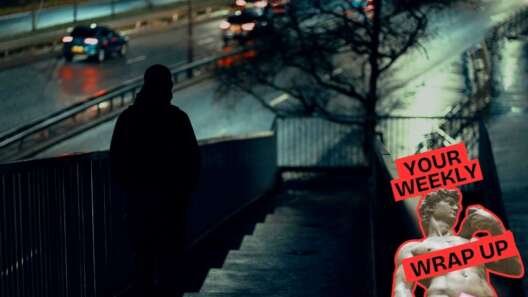
Around 150 women and non-binary people took part in Ride Bright, a 6.4km evening cycle through Glasgow on Saturday 7 November, calling for safer, better-lit streets and cycle routes.
Organised by Women On Wheels and Sunny Cycles, the event highlighted how harassment, abuse and inadequate cycling infrastructure can discourage women from travelling by bike, particularly during the darker months. Organisers say some members of their community have stopped cycling altogether following experiences of abuse.
The ride travelled from Queen’s Park to the Kinning Park Complex, combining a celebration of Glasgow’s cycling community with a call for change. Organisers hope the council’s forthcoming feminist city planning strategy, expected in 2027, will help address barriers to cycling and make public spaces safer and more accessible.
Source: Glasgow Times
2. Bereaved families demand public inquiry into Scotland’s maternity services 🏥
Bereaved parents gathered in Glasgow to call for a public inquiry into maternity care across Scotland, arguing that a recently launched independent review will not go far enough to investigate past failures and prevent further deaths.
Among the campaigners were Julie Keegan and Angus McLean, whose three-day-old son Mason died at Glasgow’s Queen Elizabeth University Hospital in 2023. An internal NHS review identified several systemic issues that may have contributed to his death, including missed tests that could have detected a life-threatening infection. NHS Greater Glasgow and Clyde apologised for missed opportunities in his care and said it had acted on the review’s recommendations.
The Scottish Government has commissioned a nine-month independent review of maternity services, with findings expected in July 2027. Unannounced inspections of Scotland’s 18 maternity units have also been ordered. Health Secretary Angela Constance said families’ experiences would be central to the review, but campaigners are calling for a public inquiry that examines previous deaths and establishes accountability.
Source: BBC News
3. Women filmed without consent for viral TikToks face barriers to justice 📱
Women in London say they have experienced distress and harassment after being filmed without their consent by social media content creators who approach them in public and at work, according to an investigation by London Centric.
One 19-year-old woman described being filmed unexpectedly at her workplace and having the video shared online, where it attracted more than 600,000 views. She said the experience left her fearful for her safety and affected how she travelled home. Police told her that the incident did not meet the legal threshold for harassment, which generally requires a repeated course of conduct.
The investigation raises questions about whether existing laws adequately address the lasting impact of viral videos filmed without consent. Following enquiries from London Centric, TikTok removed the creator’s accounts, while Instagram’s parent company Meta removed content that breached its policies. The creator disputed that his videos constituted harassment and said he was being unfairly singled out.
Source: London Centric
4. New UK pornography restrictions raise concerns over sexual expression 🔞
New restrictions on pornographic content came into force in the UK on 6 November, criminalising certain depictions of strangulation, suffocation and simulated incest, as well as sexual role-play involving people portrayed as children under 16. The measures are intended to tackle violence against women and girls and prevent the normalisation of harmful sexual behaviour.
However, adult content creators, legal experts and free speech advocates have raised concerns that the legislation could be interpreted too broadly. Some fear that consensual activities, including certain forms of kink and potentially oral sex, could fall within the definition of suffocation. Creators are already removing content from platforms over fears of prosecution, lost income and automated moderation mistakenly flagging lawful material.
The Ministry of Justice says the restrictions are designed to prevent harm rather than police sexual freedom. Critics argue that the uncertainty surrounding enforcement could disproportionately affect independent adult creators and restrict consensual sexual expression.
Source: WIRED
5. Smart glasses raise concerns over workplace harassment and privacy 👓
A Scottish worker has spoken out after being secretly filmed by customers wearing Meta smart glasses, with the footage subsequently shared online and viewed almost five million times.
Michelle De Jager told STV News that she was unaware she was being recorded and described the experience as an invasion of privacy. The incident has left her feeling uneasy around customers, while employment lawyers warn that wearable recording technology presents new challenges for businesses seeking to protect staff from harassment.
Recent changes to employment law have strengthened employers’ responsibilities to prevent sexual harassment, prompting calls for better risk assessments, staff protections and policies around recording devices. Meta says its glasses feature a visible recording light, while disability advocates have highlighted the technology’s accessibility benefits, particularly for people with visual impairments.
Source: STV News
6. Sarah J. Maas brings the realities of breastfeeding into romantasy 📚
The latest instalment of Sarah J. Maas’s bestselling A Court of Thorns and Roses series is challenging idealised portrayals of motherhood by exploring the physical and emotional realities of breastfeeding.
In A Court of Splintered Harmony, the character Feyre navigates sore nipples, leaking breasts, feeding schedules and the demands of caring for a baby while continuing her responsibilities as a political leader. Writing in Harper’s Bazaar, Jenna Rosenstein praised the novel for portraying experiences that are often overlooked in fiction, particularly within romantic fantasy.
The book also explores how breastfeeding, motherhood and sexual desire can coexist, challenging the idea that becoming a parent means losing one’s sexual identity. Rosenstein argues that these depictions help break the silence surrounding breastfeeding while recognising that it can be physically demanding, emotionally complex and not the right choice for everyone.
Source: Harper’s Bazaar
7. Germany passes law introducing tougher penalties for drug-facilitated sexual assault ⚖️
Germany’s parliament has approved legislation that would treat incapacitating drugs used to facilitate sexual assault or robbery similarly to weapons, recognising the serious harm associated with drink spiking and other forms of drug-facilitated violence.
Under the new measures, the minimum prison sentence for certain offences involving these substances would increase from three to five years. The legislation aims to strengthen the legal response to perpetrators who use drugs to incapacitate victims.
The bill received support from all parliamentary groups except the far-right Alternative for Germany (AfD), which abstained, arguing that the changes would not improve victim protection. The legislation must complete the remaining formalities before the tougher penalties take effect.
Source: DW News
8. LGBT+ charities face falling funding and rising demand across the UK 🏳️🌈
LGBTQIA+ charities in the UK are struggling as funding is cut while demand for their service continues to rise, a new report has found.
Conducted by the LGBT+ Fund and Consortium, the report surveyed more than 770 charities and revealed that funding for the sector fell by 8.6 per cent between 2023 and 2025.
The report also found that LGBTQIA+ charities are operating in a “hostile environment”, making their work even more difficult.
Source: Civil society
9. Three in four primary teachers lack confidence discussing LGBT+ inclusion with parents 🏳️🌈
Teachers would “struggle”, feel “hesitant” or feel they are not “equipped” to answer parents’ questions about LGBTQIA+ inclusive education, a new report has found.
The UK’s LGBTQIA+ young people’s charity Just Like Us surveyed 3,415 primary school staff across England, and asked them: “A parent stops you at the school gate and asks you to explain why you teach LGBT+ topics in your school. How confident would you feel replying?”.
Only 25 per cent said they would feel “very confident” and “comfortable” doing so. The majority expressed hesitation, and said they would struggle or that they don’t feel equipped to discuss the topic.
Source: Just Like Us
10. Global cervical cancer deaths could rise by nearly 40 per cent by 2050 🌍
A new study published in Nature Medicine has found that global cervical cancer cases and deaths could rise by 2050.
The researchers analysed cervical cancer incidence, deaths and health loss across 204 countries and territories between 1990 and 2023. They found that there were 887,000 new cases and 369,000 deaths worldwide in 2023.
They estimated that by 2050, cervical cancer cases could rise by 20.2 per cent and deaths by 39.3 per cent. The highest incidence and mortality rates are expected in sub-Saharan Africa.
Cervical cancer is preventable through screening and HPV vaccination. However, these measures are not available everywhere, meaning cases are likely to continue rising where people don’t have access to prevention.
Source: MedicalXpress